
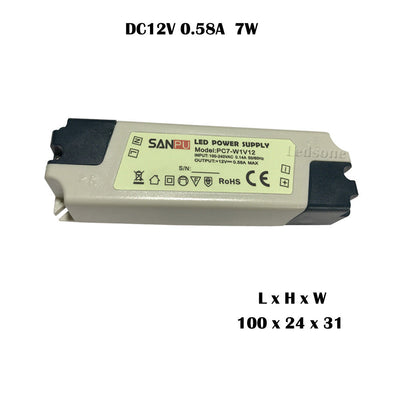
12V 7W LED Driver, IP44 Constant Voltage
Compact plastic unit for G4, MR11 and MR16 bulbs and short strips. Indoor use, non-dimmable.
£3.99£4.79
View product







Buying guide
Every low-voltage LED strip, module and panel needs a driver that matches its voltage, covers its wattage and suits the room it lives in. This guide shows you how to get all three right the first time.
Match the driver's output voltage to your LEDs, choose a wattage at least 20% above the total load, and pick an IP rating for the room: IP20 for dry indoor spaces, IP44 or IP45 for damp or sheltered spots, IP67 for outdoor and wet areas.
Most LED strips, modules and downlights run on low-voltage direct current, but your home supplies 230V alternating current. An LED transformer, also called an LED driver or power supply, sits between the two. It steps the mains voltage down, converts it to DC and holds the output steady so your lights do not flicker or burn out early.
Modern units are switching power supplies. They are small, efficient and run cool, and they include protection against short circuits, overloads and over-voltage. Our LED transformers collection holds 85 drivers, from a 3W unit for a single module to 720W supplies for large installations.
An LED transformer converts 230V mains AC into the stable low-voltage DC that LED strips, modules and panels need, and protects them from surges and overloads.
This is the first choice to make, because the two types are not interchangeable. Check the label on your LEDs before you buy anything.
| Type | Output | Typically powers | In our range |
|---|---|---|---|
| Constant voltage | Fixed 5V, 12V or 24V DC | LED strips, tape, G4 and MR16 bulbs, CCTV, signage | 67 products |
| Constant current | Fixed milliamps (for example 280mA) across a voltage range | LED panels, modules, downlights, high-power LEDs | 12 products |
Use a constant voltage transformer when your LEDs state a voltage, such as 12V. Use a constant current transformer when they state a current and a voltage window, such as 280mA at 8–11V. Pairing the wrong type can damage the LEDs or leave them unlit.
Constant voltage drivers hold the voltage fixed and suit LED strips. Constant current drivers hold the current fixed and suit panels, modules and downlights.
The driver's output voltage must equal the voltage printed on your LED strip or module. Our collection splits into 9 five-volt, 44 twelve-volt and 18 twenty-four-volt products, so each has its own shelf.
Never connect a 12V strip to a 24V driver. The strip will fail within moments.
Add up the power of everything the driver will feed, then leave headroom. A driver that runs at full capacity all day gets hot and ages faster. The working rule is to keep your load at or below 80% of the driver's rating.
Worked example: you want 5 metres of LED strip rated at 9.6W per metre. The load is 5 × 9.6 = 48W. Divide by 0.8 and you need a driver of at least 60W. A 60W unit is the right size; a 50W unit is not.
To work backwards, use this formula: (driver watts × 0.8) ÷ strip watts per metre = maximum strip length in metres. A 60W driver feeding strip at 6W per metre will run up to 8 metres.
Add up your LED wattage and divide by 0.8. The result is the minimum driver wattage you need, which gives a 20% safety margin.
The IP rating tells you how well a driver resists dust and water. The first digit covers solids and the second covers liquids. Here is how the ratings in our range compare.
| Rating | What it means | Where to use it | In our range |
|---|---|---|---|
| IP20 | Protected against fingers and large objects, no water protection. Often a vented metal case. | Dry indoor spaces, cabinets, plinths, enclosed boxes | 49 products |
| IP40 / IP44 | Plastic case. IP44 resists splashes from any direction. | Indoor areas with light moisture | 8 IP40 products |
| IP45 | Rainproof against water jets, dust resistant, not submersible. | Sheltered outdoor spots under an overhang | Rainproof drivers |
| IP67 | Dust-tight and waterproof, including temporary immersion. | Gardens, decking, bathrooms, exterior signage | 23 products |
Space is the other consideration. Slim cases tuck into kitchen plinths and ceiling voids, and our slim transformers are built for exactly that.
Use IP20 indoors in dry spaces, IP44 or IP45 where there is moisture or light rain, and IP67 for fully outdoor or wet installations.
Under-cabinet kitchen lighting usually runs on 12V strip. A slim IP67 driver hides behind a plinth or inside a cabinet void, and a 60W unit comfortably powers about 8 metres of standard strip. Always leave the driver somewhere you can reach it for servicing.
Moisture and electricity need care. Choose a waterproof driver for bathroom lighting, mount it outside the wettest zones and have a qualified electrician confirm the layout meets current regulations.
For outdoor lighting, IP67 gives the most protection. An IP45 rainproof driver works when it is mounted vertically under an overhang or inside a weather enclosure.
These usually need constant current. Browse our LED panels and LED modules, then match the driver to the current and voltage window printed on the product.
These six drivers from the collection cover the most common jobs. Prices were correct when this page was written and may change.
Compact plastic unit for G4, MR11 and MR16 bulbs and short strips. Indoor use, non-dimmable.
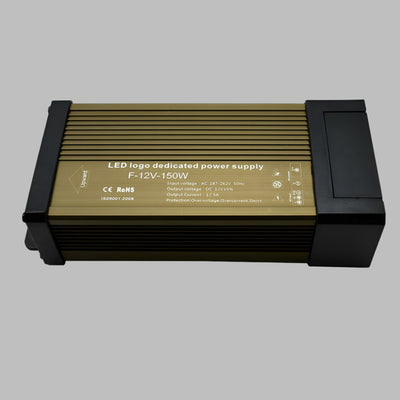
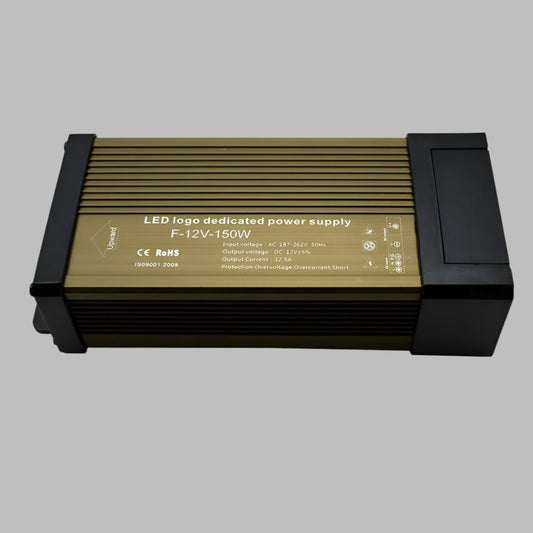
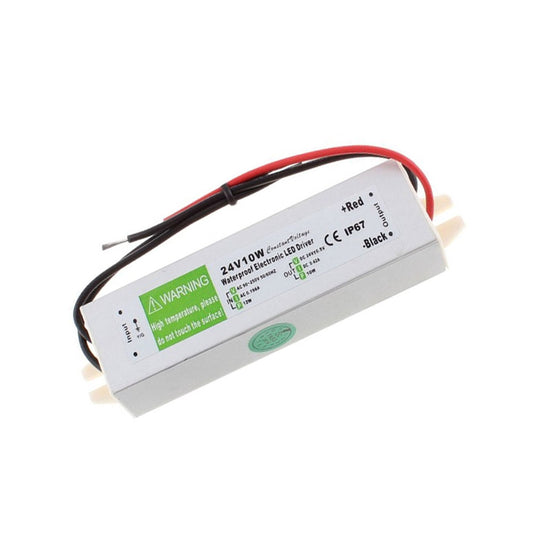
Rust-resistant aluminium case for sheltered outdoor strips, signage and CCTV. CE and RoHS certified.
Choose wattage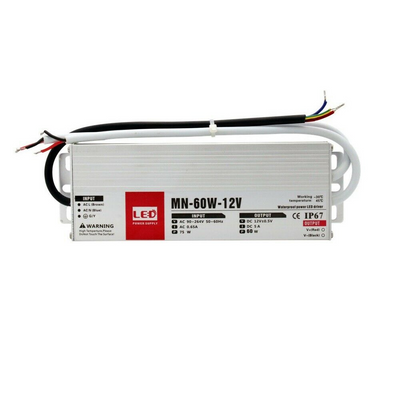
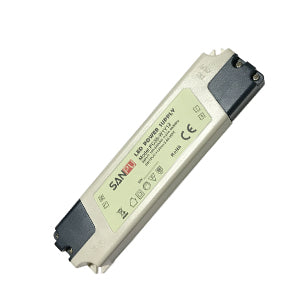
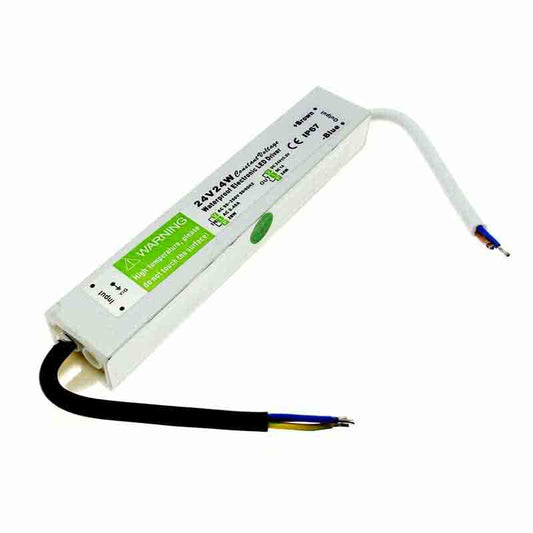
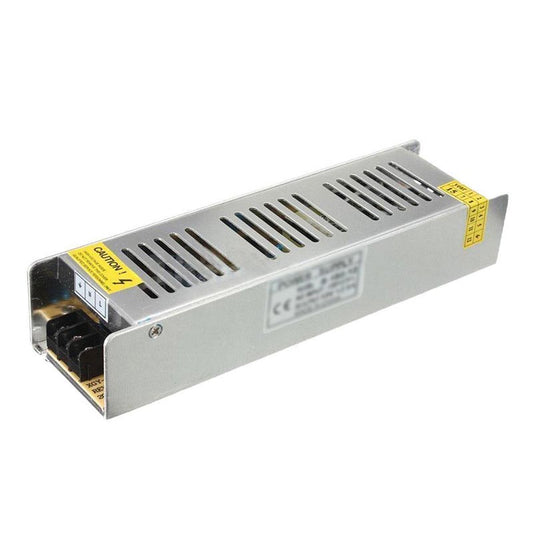
Slimline aluminium driver with a two-way output. Fits plinths and ceiling voids, with a 2-year warranty.
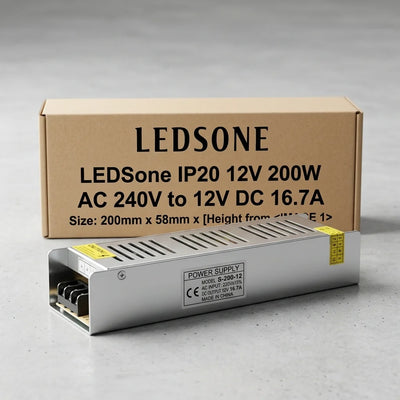
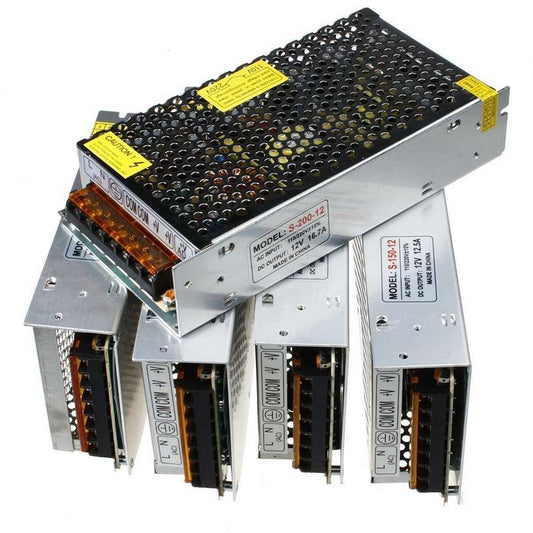
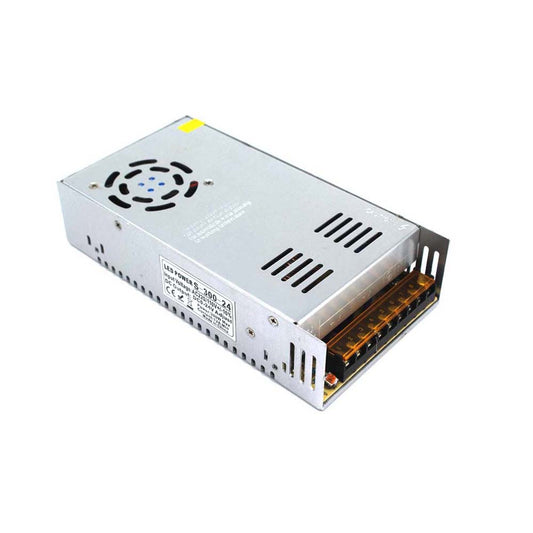
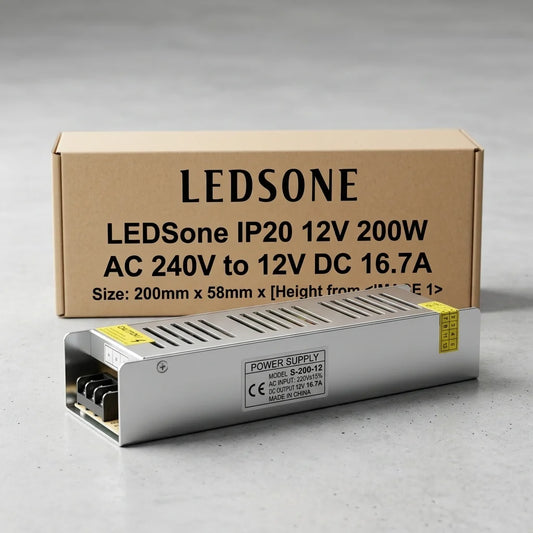
Vented metal case for large strip runs, retail displays and lightboxes. Dry indoor use only.
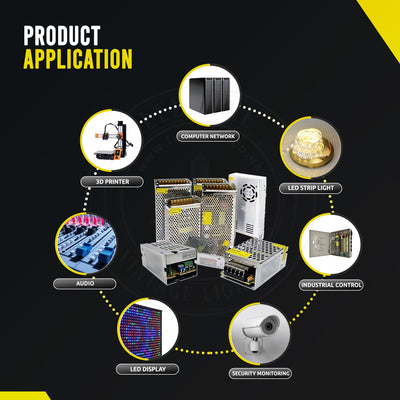
High-current 5V supply for LED strips, CCTV, routers and 3D printers, with overload and over-temperature protection.

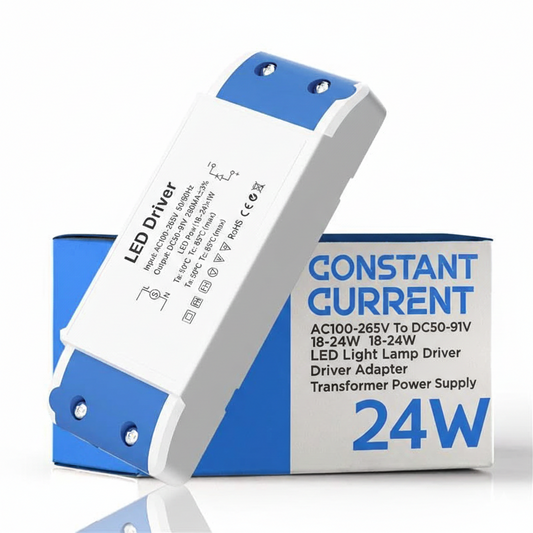
Small flame-retardant driver for panels, downlights and modules. Output 8–11V DC, indoor use.
Browse all 85 LED transformers
Low voltage is safer to handle than mains, but the driver itself connects to 230V. Fitting it is a job for a competent electrician if you are not confident with electrical work.
Our product installation guide covers wiring step by step. If your project needs a custom spec, try the product configurator, and see switches and sockets for the controls.
An LED transformer is a power supply that converts 230V mains AC into low-voltage DC, usually 5V, 12V or 24V, and keeps the output stable for LED lighting. It is also called an LED driver.
Only if the voltage matches and the wattage is high enough. Match 12V to 12V, then pick a driver rated at least 20% above the strip's total power. A constant voltage unit is the right type for strips.
A constant voltage driver holds the voltage fixed and lets the current vary with the load, which suits strips. A constant current driver holds the current fixed, such as 280mA, which suits panels and modules.
Multiply the watts per metre of your strip by the length, then divide by 0.8. Five metres at 9.6W per metre is 48W, so you need a 60W driver or larger.
IP67 offers the best protection for exposed outdoor use. IP45 rainproof drivers suit sheltered spots under an overhang, and must be mounted vertically so water cannot pool.
Many constant voltage drivers in our range are non-dimmable. The product pages state this clearly, so check the specification before you buy, and ask us if you need dimming.
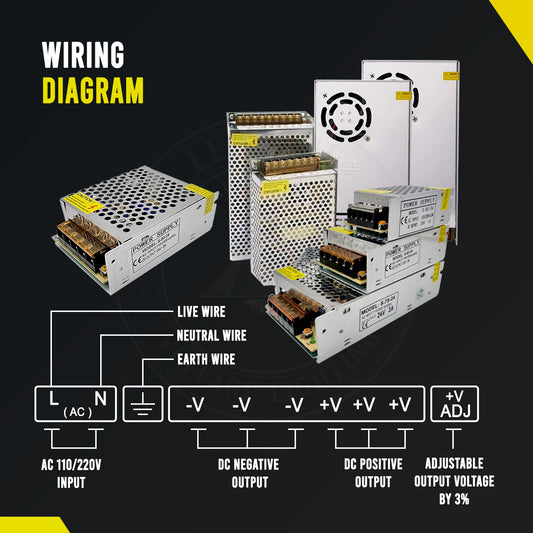
Wiring the low-voltage side is straightforward, but the mains connection should be done or checked by a qualified electrician. Always isolate the power first and follow the installation guide.
UK standard delivery takes 1–4 working days and is free on orders over £30. Next day delivery is £4.69 when you order by 1pm. See the delivery information page for details.
Tell us your LED voltage and total wattage and we will point you to the right unit. Call 02477220687 or email sales@ledsone.co.uk. Orders over £30 ship free in the UK, and you have 30 days to return unused items.
Shop LED transformersLEDSone Team
• Typically replies within 24hrs
Text chat only Not call