Single Pendant vs Cluster: Which Is Right for Your Kitchen Island in 2026?
If you've spent any time browsing kitchen inspiration this year, you've noticed the same debate popping up again and again: should your island have one bold, oversized pendant, or a cluster of two or three at staggered heights? Both looks are everywhere in 2026 kitchens, and both can look genuinely stunning — but they solve different problems, suit different islands, and involve different wiring decisions before you ever screw in a bulb.
This guide breaks the decision down properly: not just "it depends on your taste," but the actual measurements, spacing rules, electrical considerations, and style logic that determine which option will look intentional in your specific kitchen rather than like a guess.
Why This Decision Matters More in 2026
Kitchen islands have become the visual centrepiece of the home, and pendant lighting is now treated as functional jewellery rather than an afterthought. Two things have shifted this year specifically:
- Asymmetric, staggered-height clusters have moved from a designer-only trick to a mainstream trend, with multiple pendants hung at deliberately uneven drops to create visual rhythm above longer islands.
- Sculptural single pendants — oversized, organic-shaped, often in warm materials like rippled glass, brushed brass, or natural stone — are being used as a single dramatic focal point, especially in kitchens that already have a lot of visual detail (open shelving, patterned splashbacks, statement cabinetry).
In other words, both directions are valid 2026 choices. The right one for you depends on your island, your ceiling, your wiring setup, and how busy the rest of your kitchen already looks.
The Quick Answer
- Choose a single pendant if your island is under roughly 150cm long, your kitchen already has strong visual detail elsewhere, or you want a lower-maintenance install with one wiring point.
- Choose a cluster if your island is 150cm or longer, you want to fill the visual span without going oversized, or you're drawn to the staggered-height look that's trending this year.
At a Glance: Single Pendant vs Cluster
| Factor | Single Pendant | Cluster (2–3 Pendants) |
|---|---|---|
| Best island length | Under 150cm | 150cm and up |
| Visual effect | One confident focal point | Even spread, staggered rhythm |
| Best kitchen style | Busy/detailed kitchens | Simpler, more minimal kitchens |
| Ceiling fitting needed | Single ceiling rose | Multi-outlet ceiling rose |
| Wiring complexity | Low | Medium–High |
| Typical install time | Fastest | Longer (extra outlets to wire) |
| 2026 trend alignment | Sculptural, oversized single pieces | Staggered, asymmetric heights |
| Ideal for renters (plug-in) | Yes | Rarely practical |
Single Pendant: The Case For It
When one statement light works better than three
A single, well-scaled pendant reads as considered and confident. It gives the eye one clear focal point instead of asking it to process multiple fixtures, which matters if your kitchen already has busy elements — open shelving stacked with crockery, a patterned tile splashback, or heavily veined stone worktops. Adding a cluster on top of an already-detailed kitchen can tip it into visual clutter; one striking pendant lets the other design choices breathe.
Sizing your single pendant correctly
The rule of thumb: your pendant's diameter should sit between roughly one-half and two-thirds of your island's width. Go smaller and the fixture looks lost above the surface; go larger and it can dominate the sightline for anyone standing at the hob or sink behind it.
| Island Width | Recommended Pendant Diameter |
|---|---|
| 70cm | 35-47cm |
| 90cm | 45-60cm |
| 100cm | 50-67cm |
| 120cm | 60-80cm |
Height guidance for a single pendant
Hang the bottom of the shade around 75–90cm above the worktop surface (roughly 30–36 inches). This keeps the light low enough to pool warmly over the island for food prep and casual dining, without sitting in your eyeline when you're seated at a stool. If your ceiling is unusually low (under 240cm), stay toward the lower end of that range; with higher ceilings, you have room to hang slightly deeper for extra drama.
Wiring simplicity
A single pendant typically needs one ceiling rose or one recessed junction point, which makes it the simpler electrical job — helpful if you're not planning to touch existing wiring, or if you're a renter using a plug-in pendant kit rather than a hardwired fitting.
Where a single pendant falls short
On a long island — anything over about 150–180cm — one pendant, however large, tends to leave the ends of the island in shadow and can look undersized relative to the run of worktop beneath it. This is the exact scenario clusters are built to solve.


Cluster Pendants: The Case For Them
Why clusters suit longer islands
Once your island stretches past 150cm, a single fixture — even an oversized one — struggles to visually anchor the whole surface. Spacing two or three smaller pendants along the run distributes light evenly across the worktop and mirrors the proportions of the island itself, so the lighting doesn't look like an afterthought bolted onto one end.
The 2026 trend: staggered heights, not a straight row
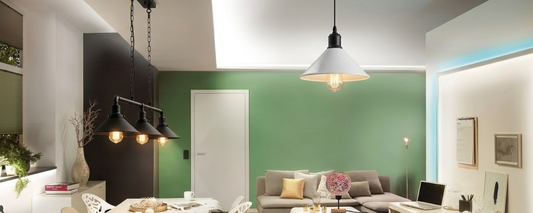
The older convention was to hang matching pendants at identical heights in a perfectly even row. The 2026 shift is toward asymmetry — hanging two or three pendants at slightly different drop lengths, sometimes even mixing two shade sizes, to create a more relaxed, gallery-like rhythm rather than a rigid line. Done well, this reads as intentional and current; done badly (heights too close together, or too erratic), it can look like an installation mistake. The key is deliberate variation, not randomness — typically a 5–10cm difference in drop between pendants is enough to register as a considered choice rather than a fault.
Spacing rules that actually work
- Centre-to-centre spacing: aim for roughly 60–80cm between the centre of each pendant. Closer than 60cm and they visually compete with each other; further than 80cm and the grouping loses its sense of connection.
- Clearance from the island ends: leave around 25–30cm between the outer edge of each end pendant and the edge of the island, so the lighting doesn't feel like it's overhanging the counter.
- How many you need: for most UK islands, two pendants suit 120–180cm, and three pendants suit anything from 180cm upward. Divide your island length by the pendant count and check the spacing lands within that 60–80cm window before you commit.
| Island Length | Recommended Pendant Count | Approx. Centre Spacing |
|---|---|---|
| 100–150cm | 2 | 55–65cm |
| 150–180cm | 2 | 65–80cm |
| 180–220cm | 3 | 60–70cm |
| 220–260cm | 3 | 70–80cm |
Height guidance for a cluster
Each pendant in the cluster should still sit within that same 75–90cm-above-worktop range, but staggered by roughly 5–10cm between fixtures for the asymmetric effect. Keep the lowest pendant no lower than about 75cm above the surface, so nobody's eyeline gets blocked while seated.
| Setup | Height Above Worktop | Notes |
|---|---|---|
| Single pendant, standard ceiling | 75–90cm | Lower end for low ceilings |
| Single pendant, high ceiling (270cm+) | 85–95cm | Room for a deeper drop |
| Cluster — pendant 1 (lowest) | 75–80cm | Never lower than 75cm |
| Cluster — pendant 2 | 80–85cm | ~5–10cm above pendant 1 |
| Cluster — pendant 3 | 85–90cm | ~5–10cm above pendant 2 |


The wiring reality nobody mentions in the trend pieces
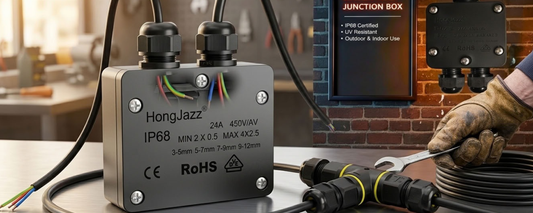
This is where most cluster projects go wrong, and it's the detail almost none of the lifestyle-trend articles actually explain: a cluster of two or three pendants needs a ceiling point that can safely support and wire multiple fittings, not three single-pendant roses awkwardly retrofitted next to each other. This is where a multi-outlet ceiling rose becomes essential — a single rose plate designed with two or three separate cable outlets, rated for the combined weight and wiring of every pendant in the group. Using a standard single-outlet rose for a cluster, or daisy-chaining pendants off one point without the correct rated fitting, is a real safety issue, not just an aesthetic one — always check the rose's rated weight limit against the combined weight of your chosen pendants before installing.
Where a cluster falls short
On a shorter island, a cluster can look cramped or fussy, and the additional wiring point adds cost and installation time compared to a single fixture. If you're not confident with the spacing maths, an uneven cluster can just as easily look like an error as it can look deliberate.
Decision Framework: Which One Is Right for You?
Work through these four questions in order — the first one you answer decisively usually settles it.
- How long is your island? Under ~150cm → single pendant is almost always the safer, better-proportioned choice. 150cm and up → a cluster starts to make more visual sense.
- How busy is the rest of your kitchen? Lots of existing detail (open shelving, patterned surfaces, ornate cabinetry) → a single statement pendant gives the eye a rest. Simpler, more minimal kitchen → a cluster adds welcome visual interest without competing with anything else.
- What's your appetite for the wiring job? Want the simplest possible install, or working with a plug-in fitting → single pendant. Happy to install (or have an electrician install) a multi-outlet ceiling rose → cluster is fully on the table.
- 4. What's the mood you're going for? Confident, sculptural, one-statement-piece energy → single pendant. Relaxed, gallery-like, "collected over time" energy → staggered cluster.
- If your answers split between the two, default to your island length — it's the single biggest factor in whether either option will actually look proportioned once installed, regardless of style preference.
Style Pairings for 2026
Whichever route you choose, material and finish matter as much as count:
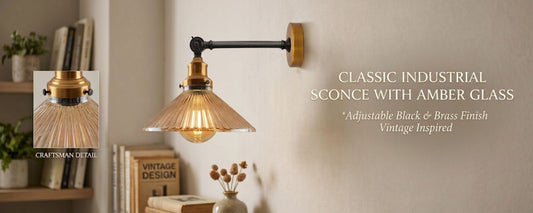
- Warm, textured metals — brushed brass, aged bronze, hammered finishes — suit both single statement pendants and clusters, and pair well with wood or stone islands.
- Rippled or smoked glass softens the light output and works especially well in a cluster, where you want each pendant to feel connected rather than visually competing.
- Matte black or anthracite metal reads as more graphic and works best as a single strong pendant in kitchens with lighter cabinetry, where you want the fixture to stand out as a clear silhouette.
- Natural materials (rattan, textured stone, hand-blown glass) are trending strongly for single statement pieces specifically, since the material detail is easier to appreciate on one larger fixture than spread across several smaller ones.
Installation & Safety Checklist
Before you order anything, work through this:
- Measure your island length and worktop height first — every other decision follows from this.
- Confirm your ceiling height and subtract your target drop to make sure you're not left with an awkwardly short or long cable run.
- If choosing a cluster, confirm the combined weight of all pendants against your ceiling rose's rated weight limit before purchase — don't assume a decorative rose is rated for multiple heavy fittings.
- Decide hardwired vs. plug-in early — plug-in kits are far simpler for a single pendant but become impractical for a properly spaced cluster.
- If you're not confident wiring a multi-outlet point yourself, this is a job for a qualified electrician — it's a genuine safety consideration, not just a style one.
Frequently Asked Questions
Is a single pendant or a cluster better for a small kitchen island?+
For kitchen islands under around 150cm, a single well-proportioned pendant usually creates a more balanced look than a cluster, which can make the space feel crowded.
How many pendants do I need for a long kitchen island?+
As a general guide, two pendants work well for islands between 120–180cm, while three pendants are suitable for islands over 180cm. Aim for around 60–80cm spacing between each pendant centre to centre for a balanced layout.
Do cluster pendants need a special ceiling rose?+
Yes. Cluster pendants require a multi-outlet ceiling rose or fitting that is rated to support the combined weight of all pendants in the group. Standard single-outlet roses are not suitable for supporting multiple pendants.
What height should pendant lights hang above a kitchen island?+
The bottom of pendant shades should generally hang around 75–90cm above the kitchen worktop. The ideal height may vary depending on ceiling height, pendant size, and seating sightlines.
Can I mix pendant heights in a cluster?+
Yes. Staggering pendant drops by around 5–10cm can create a more relaxed and intentional layered look, adding visual interest compared with a perfectly even arrangement.
Tags:
Previous
Ceiling Rose Weight Limits: What You Need to Know Before Hanging a Light
Next
Multi-Outlet Ceiling Roses Explained: How to Wire Multiple Pendants Safely