How to choose a spider pendant light for your space
A spider pendant light is an exceptionally adaptable lighting solution that allows UK homeowners to customise both the reach and height of their ceiling illumination, making it a standout feature in modern or classic interior designs this October 2026.
Unlike traditional rigid ceiling pendants that concentrate light in one fixed spot, spider lights use multiple long flexible cables suspended from a single central rose and secured to ceiling points with individual swag hooks.
This clever design lets you position every bulb directly above specific functional zones, such as a large dining table, a kitchen island, or a lounge reading area, without requiring multiple ceiling wiring outlets.
To suit various design preferences, our collection includes a versatile selection of configurations and finishes tailored to your room layout.
For example, if you want to add a warm, metallic sheen to your dining space, a 3-way hanging brushed copper spider pendant light fixture offers three adjustable arms that bring elegant symmetry and focused task lighting to medium-sized rooms.
If you prefer a bolder, more industrial aesthetic, a black spider pendant fitting equipped with flexible rubber cables and sturdy metal lamp holders delivers a clean, architectural look that coordinates seamlessly with modern fixtures.
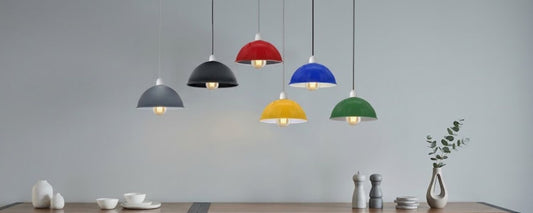
Furthermore, for simpler arrangements or targeted room accents, our single-colour spider flex pendants complete with swag hooks in one-metre or two-metre spans provide a streamlined way to redirect light exactly where your space needs it most.
Choosing the right spider ceiling light involves considering room dimensions, ceiling height, cable materials, and the overall colour scheme of your interior decor.
Larger living areas or commercial settings like open-plan cafes often benefit from extensive multi-drop arrangements that create a dramatic focal point overhead while filling wide spaces with ambient light.
For these expansive environments, a vintage retro style spider ceiling hanging light set with two-metre cable drops allows you to loop flex across large distances, bringing charming character and warm illumination to high ceilings.
If you want to make a fun, artistic statement in a bedroom, creative studio, or quirky kitchen, a five-head spider fitting with vibrant multi-coloured flex cables and matching swag hooks adds playful personality while giving you five separate light points to spread across the room.
Material choices also play a key role in achieving your desired atmosphere; for instance, opting for a spider ceiling pendant light utilizing two metres of classic three-core fabric cable and standard E27 lamp holders brings a soft, tactile quality that pairs beautifully with decorative filament bulbs.
Whichever configuration you choose, proper planning ensures that cable tension, hook placement, and clearance heights align comfortably with walkways and seating areas.
In this practical guide, we will walk you through the essential steps for selecting, measuring, positioning, and installing your ideal spider light setup, helping you achieve a professional, balanced look that transforms your living space safely and stylishly.
Choosing the right spider light
When choosing a spider light, start by considering the space where it will be installed. Spider lights vary in size, shape, and design—some are compact and suitable for smaller rooms, while others, like the 2m fabric cable pendant with a 3-core E27 fitting, are built for greater reach and can work well in high-ceiling spaces such as dining rooms or hallways. See our Ceiling and Pendant Lights.
The length of the flex or cable determines how low the light hangs, and it's important to measure your ceiling height to ensure the fixture sits at a comfortable and safe level. For example, a 2m cable gives more flexibility in adjusting the drop, which is useful in rooms with high ceilings.
Look at the material and finish too—some models, such as the brushed copper version, offer a retro industrial look, while others with metal lamp holders and rubber cables suit a more utilitarian aesthetic. The number of light sources also matters: a 5-head model provides more light coverage and can be ideal for a kitchen or workspace, whereas a single-colour pendant is better suited as an accent in a living room or bedroom.
You'll want to pick a design that matches both the room's function and your décor style.
Common questions often revolve around installation and compatibility. Most spider lights use standard E27 fittings, meaning they can take common LED bulbs, but it's worth confirming the maximum wattage and whether the fixture is designed for mains voltage.
If you're replacing an existing light, make sure the ceiling rose or canopy matches the new spider light's wiring and weight. For those with a vintage or retro taste, our range includes metal and fabric cable options with a vintage appeal, and these are often paired with swag hooks or fixed ceiling mounts, so consider which fitting suits your ceiling.
In larger spaces, a 3-way ceiling lamp with multiple heads can provide even illumination without needing additional fixtures. To help you explore more options, see our Spider Lights.
For inspiration across different styles and settings, you can also check out our Ceiling and Pendant Lights collection.
- Choose a cable length that suits your ceiling height and desired hanging level
- Consider the number of bulbs and the type of fitting (e.g. E27) for compatibility
- Match the material and finish to your room’s décor, from industrial metal to copper accents
- Check if the light includes a swag hook or fixed mounting for your installation needs
Quick rule of thumb: If the room is under 3m high, choose a single spider pendant light; for rooms over 3m, opt for a multi-light spider fitting to ensure balanced illumination.
Getting the most from your spider light
To get the most from your spider light, start by considering the room's size and ceiling height. Spider lights are particularly effective in spaces where you want to create a statement while still maintaining clear pathways or a sense of openness. See our Pendant Lighting. See our Ceiling and Pendant Lights.
For example, in a kitchen or dining area with a high ceiling, a 2m model with a metal lamp holder and rubber cable offers a balanced spread of light that draws the eye down without overwhelming the space. If you’re pairing it with a wooden table or a vintage-style island, a brushed copper finish can complement the warmth of the wood.
For smaller rooms or hallways, a 1m version with a swag hook allows for a tighter fit and still delivers focused lighting. Matching the style of your spider light to the overall theme of the room—such as a black metal finish in a modern setting or a multi-colour option in a playful or creative space—helps maintain cohesion.
Always check that your chosen fitting includes the correct cable length and fitting type (like E27) to ensure it works with your existing electrical setup.
Common questions when installing a spider light often revolve around spacing and wiring. The number of heads and their layout affects how evenly light is distributed; a 5-head design provides broader coverage than a single head, which is ideal for larger tables or work areas.
If your ceiling is uneven or the wiring needs to be hidden, the 2m fabric cable version with a 3-core cable offers a cleaner, more integrated look. For safety and compliance, always ensure the installation is done by a qualified electrician, particularly when mounting a ceiling pendant light directly to the ceiling.
Some users also ask about maintenance—regular dusting of the metal or fabric components keeps the light functioning efficiently and maintains its visual appeal. If you're looking to match your spider light with other fixtures, see our Pendant Lighting for more ideas, and for broader inspiration, explore our range of Ceiling and Pendant Lights.
For long-term upkeep, it's advisable to periodically check the wiring and secure fittings, especially in high-traffic areas or homes with children or pets, to ensure continued safety and performance. If your spider light is suspended in a high-humidity environment such as a bathroom or conservatory, consider using a model with an IP44 or higher rating to resist moisture and condensation. Clean the glass or diffuser components every few months with a soft, damp cloth and mild detergent to prevent dust buildup, which can reduce brightness and affect light distribution. When replacing bulbs, always use LED options compatible with the fitting—typically low-voltage or mains-operated LEDs, depending on the design—and ensure they are installed securely to avoid flickering. For those with ceiling fans, ensure the fixture is rated for use in that environment, and consider professional installation if you're unsure about the ceiling's load-bearing capacity. Regular inspection of the canopy and suspension hardware will help prevent loosening over time, especially in homes with high ceilings or frequent air movement.
In addition to routine checks, it’s important to monitor the temperature of the light fitting, especially in enclosed spaces or when using high-lumen LED bulbs that generate significant heat. Ensure there’s adequate airflow around the fixture to prevent overheating, which can shorten the lifespan of both the LEDs and internal electronics. Avoid using LED bulbs with a colour temperature that exceeds the fitting’s design specifications, as this may cause excessive heat build-up. If the spider light is installed in a kitchen, be mindful of oil and steam exposure, which can damage components over time—even in IP44-rated units. Periodically test the light’s operation, particularly if it’s controlled by a dimmer or smart system, to verify compatibility and responsiveness. If you notice any signs of electrical malfunction, such as buzzing, discolouration of the ceiling or wiring, or inconsistent performance, disconnect power immediately and consult a qualified electrician. For older fittings, consider upgrading to a modern LED-compatible version that offers enhanced efficiency, reduced energy consumption, and improved safety features such as built-in surge protection.
- Choose a cable length that matches your ceiling height and room layout
- Use a multi-head design for larger tables or open-plan spaces
- Ensure the fitting type matches your existing bulb holders (e.g., E27)
- Consider fabric cable versions for a discreet, integrated look
Shop the Range
Browse some of our best-selling products for spider light below.

Vintage Retro Ceiling Spider Hanging Lights 2M
37.89 GBP
View Product
Black Pendant Light Spider with Rubber Cable Metal Lamp Holder
25.89 GBP
View Product
Spider shape Single Colour pendant Light Flex Swag Hook 1M | 2M
7.45 GBP
View Product
Spider Pendant Lamp 3 Way Hanging Brushed Copper Ceiling Lamp Lighting
38.79 GBP
View Product
5 Head Spider shape Multiple Colour pendant Light Flex Swag Hook
24.2 GBP
View Product
Spider Ceiling Pendant Light 2m Fabric 3Core Cable E27
12.49 GBP
View ProductStill not sure what's right for you?
Browse our full range or get in touch -- we're happy to help you plan the right choice.
Shop the full rangeFrequently Asked Questions
What is a spider light ceiling fixture?
A spider light ceiling fixture is a decorative lighting design that features multiple arms extending from a central point, resembling a spider’s legs. These are commonly used in modern or industrial interiors and can be fitted with various lamps and shades. See our Spider Lights for more details.
Are spider lights suitable for modern homes?
Yes, spider lights are well-suited to modern homes, particularly those with open-plan or industrial-style interiors. They provide both ambient and decorative lighting, enhancing the overall aesthetic of a space.
Can spider lights be used in kitchens or dining areas?
Spider lights are ideal for kitchens and dining areas, offering bright, central illumination. They are especially effective when hung over a table or island, providing focused light while adding a stylish design element.
How do I choose the right size for a spider ceiling light?
Choose a spider ceiling light based on the room size and ceiling height. A larger fixture is suitable for bigger rooms, while smaller models work well in compact spaces; consider the spread of arms and overall diameter when selecting.
What types of spider lights are available at Ledsone?
Ledsone offers a range of spider lights, including 2-head and multi-head models such as the 2 Head Cage Ceiling Pendant Lamp Swag Hanging Spider Light~4275. These are available in various styles and sizes to suit different interior designs.
How do spider pendant lights differ from traditional ceiling lights?
Spider pendant lights differ from traditional ceiling lights by featuring multiple arms or 'legs' that support individual lamps, offering a more decorative and visually striking effect, while also providing directional lighting from multiple angles.
Final Thoughts
Whether you choose a dramatic multi-cable setup or a minimalist 3 spider pendant light, spider lights offer unmatched flexibility to transform your space. A versatile spider ceiling light lets you customise drop lengths and spread illumination exactly where needed. Upgrade your decor with a modern spider pendant light fitting from LEDSone to create an effortless, stylish focal point.
Tags: