Dimmable LED Bulbs UK: What You Need to Know Before You Buy
Why Choosing the Right Dimmable Bulb Matters More Than You Think
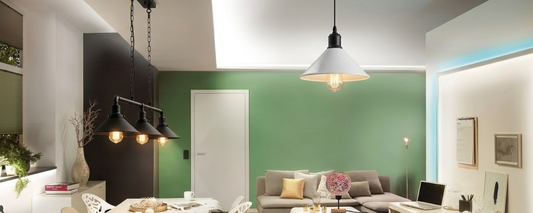
Picture this: you've spent a weekend redecorating your living room. New pendant lights, fresh paint, a beautifully curated space. You flick on the dimmer switch to set the mood — and instead of a smooth, warm glow, you get flickering, buzzing, and a light that refuses to go below 50% brightness without strobing like a disco.
Sound familiar? You're not alone. This is the single most common complaint about LED lighting in UK homes right now, and in almost every case it comes down to one simple problem: the wrong bulb, the wrong dimmer, or both.
The good news is that dimmable LED bulbs done right are genuinely transformative. They let you shift a room from bright task lighting to soft, atmospheric candlelight at the twist of a dial. They save significant money on energy bills. They last for years — in many cases over a decade. And with the right combination of bulb and dimmer switch, they work completely silently and flicker-free.
This guide covers everything you need to know before you buy dimmable LED bulbs in the UK in 2026 — from understanding how dimming works, to choosing the right fitting and colour temperature, to solving the most common problems homeowners run into after installation.
At LEDSone, we stock a wide range of dimmable LED bulbs across all major UK fittings — E27, B22, E14 and more — so you'll find exactly what you need once you know what to look for.
How Dimmable LED Bulbs Actually Work
To understand why compatibility matters so much, it helps to know a little about what's happening inside the bulb when you dim it.
Traditional incandescent and halogen bulbs work by passing electricity through a resistive filament. Dimmer switches reduce the power flowing to the bulb, which makes the filament glow less intensely — a simple, reliable process.
LED bulbs work completely differently. Inside every LED bulb is a small electronic component called a driver, which converts the mains AC supply into the stable DC current the LED chip needs to operate. When you attach a dimmable LED to a dimmer switch, the dimmer sends a modified electrical signal that the driver then interprets as an instruction to reduce brightness.
Critically, not all LED drivers are designed to handle this modified signal. A non-dimmable LED bulb has a fixed-output driver — it simply isn't built to respond to dimming input. Connecting it to a dimmer switch will at best result in the bulb ignoring the dimmer entirely, and at worst cause flickering, buzzing, or premature failure.
A dimmable LED bulb, by contrast, contains a driver specifically engineered to receive and respond to the dimming signal, smoothly adjusting the brightness from full output down to a low minimum level — typically somewhere between 5% and 20% depending on the bulb quality.
The takeaway: always check that the word "dimmable" appears explicitly on the bulb packaging before buying. It is not a universal feature of LED bulbs, and there is no way to make a non-dimmable bulb work on a dimmer switch.
Choosing the Right Fitting: E27, B22 or E14?
Once you understand how dimmable LED bulbs and dimmer switches interact, the next decision is choosing the correct bulb fitting for your light fixtures. UK homes use three main fitting types:
E27 — Edison Screw (large)
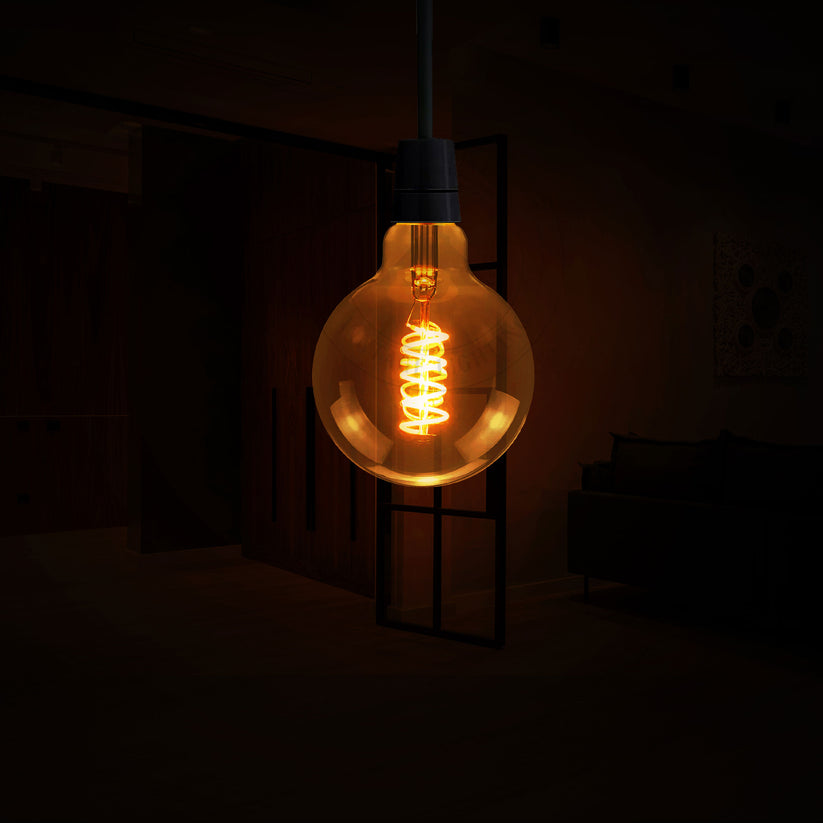
The E27 is a large screw fitting (27mm diameter) and is the most widely used bulb fitting in modern UK pendant lights, table lamps, floor lamps, and ceiling fittings. If your fixture has a screw cap, it's almost certainly E27. This fitting is especially common in vintage-style and statement lighting, where the bulb itself is a design feature.
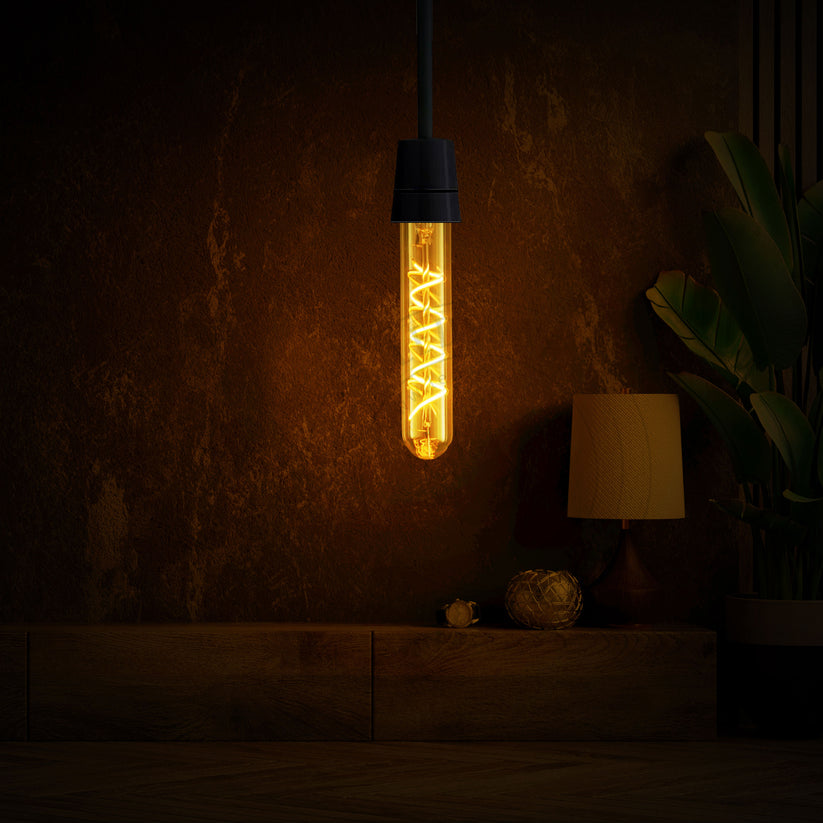
Browse LEDSone's dimmable E27 bulbs — available in GLS (standard globe shape), vintage filament, tubular, and globe styles, all suitable for dimmable installations when paired with a compatible dimmer.
B22 — Bayonet Cap (large)
The B22 is the traditional British bayonet fitting — two pins that twist and lock into the holder. It remains extremely common in older UK homes, particularly in pendant ceiling lights, bedside lamps, and standard room lighting installed before the mid-2000s. If your bulb pushes in and twists to lock, it's B22.
Browse LEDSone's dimmable B22 bulbs — a full range of warm white dimmable options in standard wattages to replace existing bayonet bulbs.
E14 — Small Edison Screw (small)
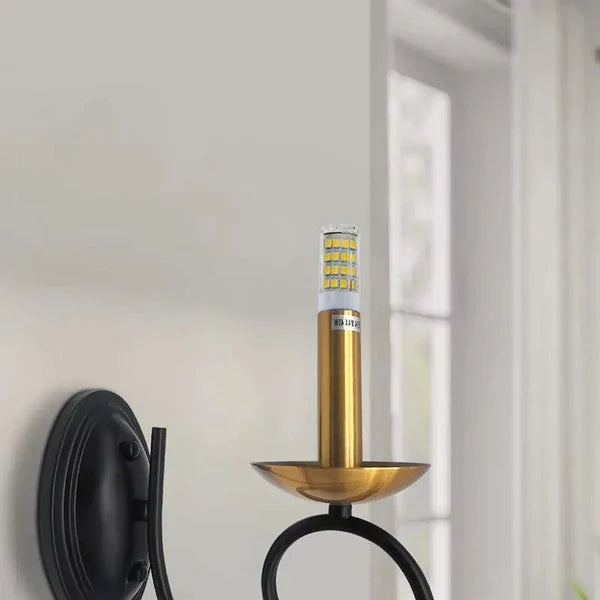
The E14 is a smaller screw fitting (14mm diameter), used in decorative fittings, chandeliers, wall lights, mirror lights, and bedside lamps where a smaller candle-shaped or golf ball bulb is required. If you have a chandelier or multi-arm pendant fitting, it almost certainly takes E14 candle bulbs.
Browse LEDSone's E14 candle and small screw bulbs — including dimmable candle and golf ball shapes for decorative lighting.
Quick rule: Look at the existing bulb, or the inside of the holder itself — the fitting type will usually be printed there. Never guess; fitting the wrong base type will mean the bulb physically won't fit.


Understanding Colour Temperature: Warm White vs Cool White
Dimmable LED bulbs are available in a range of colour temperatures, measured in Kelvin (K). This is one of the most important buying decisions for the atmosphere and mood you want to create in each room.
2700K — Warm white
This is the closest equivalent to old incandescent bulb light — a soft, golden, slightly amber glow. It creates warmth, intimacy, and comfort. This is the right choice for living rooms, bedrooms, dining rooms, and anywhere you want a relaxed, inviting atmosphere. When dimmed, 2700K bulbs get even warmer and more amber in tone, mimicking the effect of candlelight. For most UK homeowners choosing dimmable LED bulbs for home use, 2700K is the recommended default.
3000K — Soft white / warm neutral
Slightly crisper than 2700K but still firmly in the warm range. A good choice for kitchens where you want a warm feel but need slightly better visibility for cooking tasks. Also popular in rooms as a balance between functional clarity and flattering warmth.
4000K — Cool white / natural white
A clean, neutral white light — bright and clear without the blue tones of daylight. Better suited for kitchens, home offices, utility rooms, and garages where clear task lighting is more important than atmospheric warmth. Less commonly used with dimmer switches in living spaces.
6500K — Daylight
Very bright, cool, blue-toned light. Excellent for detail work, workshops, and commercial task lighting. Not recommended for living spaces or bedroom use — the cool blue tone actively suppresses melatonin production, making it harder to relax and sleep.
For most dimmable LED applications in UK homes, 2700K warm white is the go-to choice. It dims beautifully, gets more atmospheric as brightness reduces, and complements virtually every interior style.
How Bright Should Your Dimmable LED Bulb Be?
LED brightness is measured in lumens — not watts. Watts measure energy consumption; lumens measure actual light output. Here's a quick reference guide for replacing common bulb wattages:

| Old bulb wattage | Lumens needed | LED wattage equivalent |
|---|---|---|
| 40W incandescent | 450 lumens | 5–6W LED |
| 60W incandescent | 800 lumens | 8–10W LED |
| 75W incandescent | 1,100 lumens | 11–13W LED |
| 100W incandescent | 1,500 lumens | 14–16W LED |
For rooms with dimmer switches, it makes sense to choose a bulb at the higher end of the brightness range for that space — because you can always dim it down, but you can't dim it up. A 10W dimmable LED rated at 806 lumens in a living room pendant gives you full brightness for practical tasks and can be wound right down to a soft 100 lumens or less for evening relaxation.
Room-by-Room: Where Dimmable LED Bulbs Make the Biggest Difference
Living room
The room with the widest range of lighting needs in any home. Bright for reading, socialising, or working from home; softer for films, music, and evening relaxation. A dimmable LED in the main ceiling pendant combined with additional lamps gives complete flexibility across every occasion. Use warm white 2700K bulbs at 800–1,000 lumens for maximum versatility.
Dining room
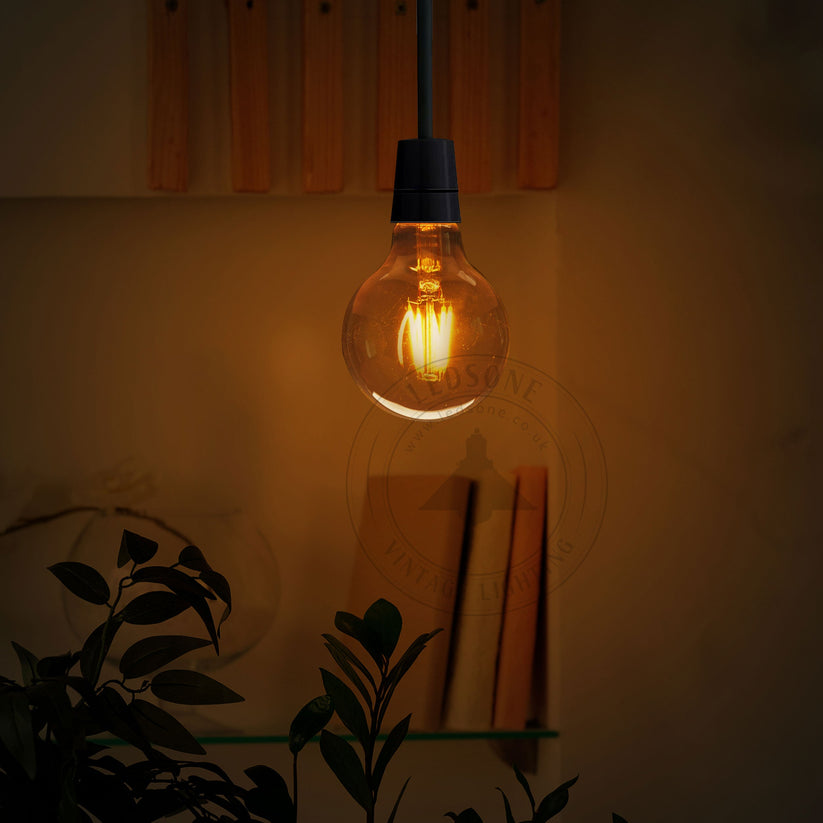
Lighting plays a huge role in how a dining table feels. Bright overhead light makes dinner feel like a canteen; a pendant dimmed to around 40% with warm 2700K light creates an entirely different atmosphere. Dimmable LED bulbs in pendant lights over a dining table are one of the most worthwhile lighting upgrades you can make. Pair with vintage filament dimmable bulbs for an especially warm, characterful effect.
Bedroom
The bedroom needs to transition across the day — from morning brightness for getting ready, to softer reading light in the evening, to near-darkness for sleep. Dimmable LED bulbs in bedside lamps, wall lights, and ceiling pendants make this completely effortless. Warm 2700K at a moderate lumen level (around 450–600 lumens per fitting) is ideal.
Kitchen
The kitchen benefits from dimmable pendant lights over an island or dining area within an open-plan layout, allowing you to transition between cooking brightness and a softer dining atmosphere without changing the bulbs. Overhead task lighting over worktops is better left non-dimmable at a cooler, brighter setting.
The 5 Most Common Dimmable LED Bulb Problems — and How to Fix Them
- Flickering when dimmed: The most reported problem with dimmable LED bulbs in UK homes. In the vast majority of cases, the cause is an incompatible leading edge dimmer switch. Solution: Replace the dimmer with a trailing edge, LED-compatible model. If replacing the dimmer isn't an option, look for dimmable bulbs that explicitly claim compatibility with leading edge dimmers.
- Buzzing or humming: A buzzing sound when dimmed is almost always caused by either an incompatible dimmer (again, usually a leading edge TRIAC dimmer) or a bulb with a low-quality internal driver. Solution: Switch to a trailing edge dimmer, and choose a higher-quality dimmable LED bulb.
- Light won't go below 20% brightness: Many older leading edge dimmers have a minimum load threshold that was designed for incandescent bulbs drawing 40–60W. LED bulbs draw far less current, which means the dimmer can't register the load properly at the bottom of its range, causing it to cut off before reaching true low light. Solution: A trailing edge LED dimmer with a programmable minimum brightness setting will resolve this completely.
- Lights flicker at low brightness only: This happens when the total wattage on a dimmer circuit falls below the dimmer's minimum load requirement. If you have three 6W LED bulbs on a circuit, the total 18W load may be below the minimum threshold of an older incandescent-rated dimmer. Solution: Use an LED-rated trailing edge dimmer with a lower minimum load (modern LED dimmers typically work from as low as 5W total), or add more bulbs to the circuit to increase the total load.
- Bulb turns off completely at the bottom of the dimming range: Known as "drop-out," this happens when the dimmer reduces the signal below the minimum level the LED driver needs to maintain operation. The driver resets and the light switches off. Solution: Trailing edge dimmers with programmable minimum brightness settings eliminate drop-out entirely. Some quality dimmable LED bulbs also have built-in compensation for this, maintaining operation further down the range.
Dimmable vs Non-Dimmable LED Bulbs: Do You Actually Need Dimmable?
If you don't have dimmer switches, you don't need dimmable LED bulbs — and there's no benefit to buying them. Non-dimmable LED bulbs are slightly less expensive and work perfectly well on standard on/off circuits. Save the dimmable models for rooms where you actually have or plan to install a dimmer switch.
That said, if you're planning a lighting upgrade, it's worth considering installing dimmer switches throughout. The cost of a trailing edge LED dimmer switch is modest, and the ability to adjust your lighting across a full range of brightness levels transforms how you use every room in your home.
Energy Saving: What Dimmable LED Bulbs Actually Save You
One of the most compelling reasons to make the switch to dimmable LED bulbs is the energy saving — which continues even when the bulbs are dimmed.
A standard 60W incandescent bulb costs approximately £6.57 per year to run at four hours per day, based on the UK average electricity rate of approximately 28p per kWh in 2026. A 9W LED replacement producing the same light output costs approximately £0.99 per year under the same conditions. That's a saving of over £5.50 per bulb, per year.
Across a home with ten bulbs replaced, you're looking at savings of £55 or more annually — just from the switch to LED. When those bulbs are also dimmed for a portion of their running time, the savings increase further, because dimming an LED genuinely reduces its power consumption proportionally.
The energy-saving LED bulbs range at LEDSone includes A-rated options that maximise these savings while delivering excellent light quality.
★★★★★
“Really impressed with these bulbs. Great for setting a cosy mood in the evenings. Highly recommend!”
★★★★★
“Lovely warm light and no flickering at all. I’ve tried a few dimmable bulbs before, but these are by far the best quality. Perfect for my living room lighting.”
★★★★☆
“Good value for money. Installation was easy. Would definitely buy again.”
★★★★★
“These bulbs are exactly what I needed. The dimming range is excellent, and they create a really relaxing atmosphere. Fast delivery as well!”
Quick Buying Checklist: Before You Order
Use this checklist every time you buy dimmable LED bulbs:
✓ Check the fitting type — E27 screw, B22 bayonet, or E14 small screw?
✓ Confirm your dimmer type — Leading edge or trailing edge? LED-compatible?
✓ Look for the word "dimmable" on the bulb packaging — don't assume
✓ Choose the right colour temperature — 2700K for warm/living spaces, 3000K for kitchens
✓ Select the right lumen output — match to the brightness you need (see table above)
✓ Check minimum dimming level — quality dimmable LEDs should dim to at least 10%
✓ Verify flicker-free operation — look for this specifically stated on the packaging
Final Summary
Dimmable LED bulbs are one of the most worthwhile lighting upgrades you can make to a UK home — but only when you get the pairing right. Buy dimmable bulbs, confirm your dimmer switch is trailing edge and LED-compatible, choose 2700K warm white for living spaces, and select the correct fitting type for your fixtures. Do those four things, and you'll have smooth, silent, beautiful dimmable lighting that costs a fraction of what incandescent bulbs used to.
Tags:
Previous
12V vs 24V LED Transformer UK: Differences, Wattage & Which to Buy (2026)
Next
Discover Stylish and Functional Wall Light Shades for Your Home