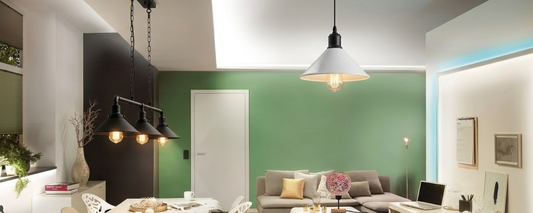
What Colour Lampshade Makes a Room Look Bigger?
Short answer: light, pale, and translucent-coloured lampshades — think white, cream, ivory, and soft grey — make a room look bigger because they reflect more light instead of absorbing it. But the full answer depends on your room's ceiling height, wall colour, and where the light actually falls. Here's exactly how to choose.
Quick answer: White and cream lampshades reflect up to 80% more light than dark shades, bouncing brightness onto walls and ceilings, which visually pushes them "back" and makes the room feel more spacious.
Why Lampshade Colour Affects Room Size
It comes down to light reflectance. Pale lampshades let more light pass through and bounce off the shade onto your walls and ceiling. This creates soft, even illumination that removes shadowy corners — and shadows are what make a room "read" as small and boxed-in. Dark shades do the opposite: they absorb light, creating pools of brightness with heavy shadow around them, which chops the room up visually and makes it feel tighter.
Best Lampshade Colours for a Bigger-Looking Room
| Colour | Effect | Best For |
|---|---|---|
| White | Maximum light reflection, brightest overall glow | Small living rooms, hallways |
| Cream / Ivory | Warm reflection without harshness | Bedrooms, cosy spaces |
| Soft Grey | Diffused, modern light spread | North-facing or low-light rooms |
| Pale Linen / Natural | Textured but still light-reflecting | Scandi or neutral interiors |
| Dark Navy / Charcoal | Absorbs light, creates contrast pools | Large rooms only, as accent lighting |


Extra Factors That Matter as Much as Colour
1. Shade Material
Colour is only half the story. A white cotton shade lets light glow through it, while a white metal shade only reflects light downward or upward, not through it. For a room-brightening effect, choose fabric, linen, or frosted glass shades over solid opaque materials.
2. Lampshade Shape
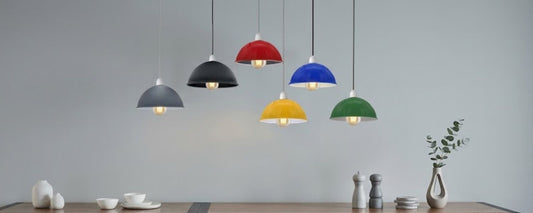
Empire and drum shades that are open at the top spill light upward onto the ceiling — this is the single biggest trick for making a room feel taller and bigger. A closed-top shade traps light and only lights the area directly below it.
3. Bulb Colour Temperature
Even the palest shade won't help if the bulb inside is too warm or too dim. Pair light-coloured shades with a 2700K–3000K warm white LED for a cosy-but-bright balance, or 4000K if you want a crisper, more spacious daylight feel.
 11% OFF


 20% OFF
Where to Place Light-Coloured Lamps for Maximum Effect
- Corners: A pale-shaded lamp in a dark corner does more to open up a room than one in the centre.
- Beside mirrors: Light bounces off the mirror and doubles the spread.
- At varying heights: Mix a floor lamp, table lamp, and pendant so light hits walls at multiple levels rather than one flat pool.
Lampshade Mistakes That Make Rooms Look Smaller
Even with the right colour, a few common mistakes can undo the effect entirely. Here's what to avoid:
- Using a shade that's too small for the lamp base. An undersized shade creates an odd silhouette and casts light in a narrow, harsh circle rather than a soft spread — this actually draws the eye to how compact the space is.
- Matching the shade colour to a dark wall. If your walls are already deep-toned, a dark shade blends into the background and the room loses its light source almost entirely.
- Placing lamps only at one height. A room lit entirely from waist-height table lamps feels flatter and smaller than one with light spilling from multiple levels — floor, table, and ceiling.
- Choosing a shade that's too opaque. Thick, lined shades block light from glowing through the fabric itself, so you lose the soft ambient wash that makes pale shades effective.
- Overlooking bulb brightness. A pale shade over a dim, low-lumen bulb still won't lift a room. Match your shade choice with adequate lumens for the room size (see our lumens guide below).
Room-by-Room Lampshade Colour Guide
Small Living Rooms
Go with white or cream drum shades in a fabric finish, paired with a floor lamp in the darkest corner. This combination does the most to open up cramped seating areas, especially in period properties with box-shaped reception rooms.
Small Bedrooms
Soft ivory or blush-white shades on bedside table lamps keep the space feeling calm rather than stark, while still reflecting enough light to avoid heavy shadows. Avoid anything with a lined, dark interior — it directs light downward only and leaves the upper half of the room dim.
Home Offices & Studies
Pale grey or white shades paired with a cooler 4000K bulb create a crisper, more spacious feel that also supports focus and reduces eye strain during screen work.
Hallways & Entryways
These are usually the darkest, narrowest spaces in a home. A single pendant or wall light with a white, open-top shade makes the biggest visual difference here, as it's often the only light source in the space.
Low-Ceiling Rooms
Prioritise shape over colour here — a pale, open-top shade angled to bounce light upward will do more to visually raise a low ceiling than colour alone. Pair with our Low Ceiling Lighting Guide for fitting-specific advice.
 6% OFF
 11% OFF
 15% OFF
 17% OFF
Styling Tip: Layer Light and Shade Colour Together
Interior designers rarely rely on a single lamp to open up a room — they layer light sources at different heights and let shade colour do double duty. Try pairing:
- A white drum floor lamp in the darkest corner
- A cream table lamp with a fabric shade near the seating area
- A pendant with a light, open-top shade as the central ceiling fixture
Common Myths About Lampshade Colour, Debunked
Myth: "White shades always look boring"
White doesn't mean plain. Textured white shades, such as pleated linen, ribbed cotton, or fluted glass, add visual interest while still reflecting maximum light. The brightening effect comes from the colour and translucency, not the absence of texture.
Myth: "Dark shades are always a bad idea in small rooms"
Not entirely true. A single dark shade used sparingly as an accent, paired with two or three pale-shaded lamps in the same room, can add depth without dragging the whole space down. The mistake is using dark shades as the only light source.
Myth: "Any white bulb will brighten a room the same way"
Bulb colour temperature changes how "big" a room feels just as much as shade colour. A warm 2700K bulb under a white shade gives a cosy glow, while a 4000K daylight bulb under the same shade reads as crisper and more spacious. Neither is wrong, but they're not interchangeable if size perception is the goal.
How to Test if Your Current Lampshade Is Making Your Room Look Smaller
Before buying anything new, try this quick test:
- Turn on only that lamp at dusk and stand in the doorway. Note how much of the room is actually lit versus how much is left in shadow.
- Check the ceiling. If it stays dark while the lower half of the room is lit, your shade is likely closed-top or too dark, and light isn't reaching upward.
- Look at the walls nearest the lamp. A well-reflecting shade will cast a visible, soft glow onto the nearest wall. If the wall stays dim right next to the lamp, the shade is absorbing more light than it reflects.
- Compare with a plain white sheet of paper held near the shade. If the paper looks noticeably brighter than the shade itself, your current shade is likely darker or more opaque than ideal.
Autumn 2026: Why Lampshade Colour Matters More This Season
As daylight hours shorten going into autumn 2026, rooms rely on artificial light for a much larger part of the day, which makes shade colour choices more noticeable than they are in summer. Pale shades paired with warm 2700K–3000K bulbs are especially effective this season, as they compensate for the loss of natural daylight while still keeping rooms feeling open rather than dim and enclosed. This is also a good time of year to test and refresh lampshades, since rooms that felt spacious under bright summer daylight can suddenly feel smaller once evenings draw in.
Quick Shopping Checklist
When choosing a lampshade to make a room look bigger, check off these five points before you buy:
- Shade colour is white, cream, ivory, or pale grey
- Material is fabric, linen, or frosted glass, not solid opaque plastic or metal
- Shape is open-top (empire or drum) rather than fully enclosed
- Bulb is 2700K–4000K depending on desired warmth
- Shade size is proportional to the lamp base (roughly two-thirds the height of the base)
Frequently Asked Questions
Do light-coloured lampshades really make a room brighter?+
Yes. Light and white lampshades reflect significantly more light than dark shades, which increases the overall brightness in the room and reduces shadowed areas that make spaces feel small.
Do dark lampshades make a room feel smaller?+
Generally yes, especially in already small or low-light rooms. Dark shades absorb light rather than reflecting it, which creates strong contrast and heavier shadows that can make a room feel more closed-in.
What colour lampshade is best for a small bedroom?+
Cream or soft white shades in a fabric material work best for small bedrooms, as they diffuse light gently without feeling clinical, while still brightening the space.
What colour lampshade is best for a north-facing room?+
White or pale grey shades are ideal for north-facing rooms since they lack natural warm light, and a cooler-toned pale shade helps balance and brighten the space.
Can a lampshade colour affect ceiling height perception?+
Yes. Open-top shades in light colours allow light to spill onto the ceiling, which visually raises it and makes the whole room feel taller and larger.
What's the best lampshade material for making a room look bigger, not just colour?+
Fabric, linen, or frosted glass shades work best because they let light glow through the material itself, not just reflect off the surface. This creates a softer, more ambient spread than opaque materials, even in a similar shade colour.
Should all lamps in a room have the same shade colour?+
Not necessarily. Keeping shades within the same light tonal family, such as white, cream, and pale grey, maintains a cohesive brightening effect, but slight variation in texture or material adds depth without darkening the overall room.
Can I still use a dark lampshade in a small room?+
Yes, as an accent alongside pale-shaded lamps, but it shouldn't be the only light source in a small room, since dark shades absorb rather than reflect light and can make the space feel more enclosed if used alone.
How do I know if my current lampshade is making my room look smaller?+
Turn on the lamp at dusk and check whether the ceiling and nearby walls receive visible light spread. If the light stays pooled directly under the shade with dark ceilings and walls nearby, the shade is likely too dark or too opaque to help the room feel bigger.
Labels:
Vorig
Can Warm White Light Reduce Stress? The Science Behind Cosy Lighting and Relaxation
Volgende
Eco-Friendly Lighting: The Energy-Saving LED Bulbs Guide for UK Homes (2026)