Easy Fit Lamp Shades: The Complete Buying Guide (UK)
If you've ever wanted to change the look of a room without calling an electrician, an easy fit lamp shade is almost certainly the answer. This guide covers everything: what these shades actually are, which style works best in a kitchen versus a living room, how to choose the right one for a UK ceiling rose, how easy fit shades compare to other lighting options, and how to fix the most common problems people run into after fitting one.
Whether you're refreshing a rental property, finishing off a full room redecoration, or simply replacing a shade that's seen better days, the same core decisions apply: get the fitting type right, pick a material suited to the room, and size the shade to the space. Get those three things right and the rest — colour, finish, and style — is down to taste.
What Is an Easy Fit Lamp Shade?
An easy fit lamp shade is a ceiling lampshade designed to fit directly onto a standard bayonet (B22) or Edison screw (E27) light fitting without any wiring, tools, or an electrician. The shade slides or clips onto the existing lamp holder using a spring-loaded or clip-on fitter ring, which is what makes it the fastest and safest way to update a light fixture yourself.
Because no rewiring is involved, easy fit shades are the go-to choice for renters, first-time buyers, and anyone who wants to refresh a room in minutes rather than hours. The category covers two broad types:
- Fabric and paper shades — drum, empire, or tapered shapes that diffuse light softly and add colour or texture to a room.
- Wire cages and metal shades — open-frame designs that expose the bulb, giving a more industrial or vintage look and a wider spread of light.
Both types use the same principle: a fitter ring with spring clips grips the existing lamp holder, so the shade goes on and comes off without ever touching a wire.
How Easy Fit Shades Actually Attach
Inside the fitter ring, two or more metal clips press against the lamp holder under tension. To fit a shade, you switch off the light, remove the bulb, slide the shade's fitter ring up over the holder until the clips grip, then replace the bulb. Most shades take under five minutes to install, and the process is identical whether you're fitting a fabric drum shade or a metal cage.
Fitting tip: always turn the light off at the switch (and ideally the fuse box) before handling the lamp holder, even though you're not touching any wiring.
How to Fit an Easy Fit Lamp Shade in 5 Steps
- Turn off the power at the wall switch, and at the fuse box if you want to be extra cautious while the bulb is out.
- Remove the existing bulb so you have clear access to the lamp holder.
- Slide the shade's fitter ring up over the holder, aligning the spring clips with the neck of the fitting.
- Push until it clicks — you should feel the clips seat firmly, with no wobble when you gently tug the shade.
- Replace the bulb and switch the power back on to test the fit before you consider the job done.
The whole process rarely takes more than five minutes, and because you're never disconnecting a wire, there's no need to know anything about UK wiring colours or earth connections.
Popular Easy Fit Shade Styles Explained
"Easy fit" describes how a shade attaches, not what it looks like — so the style options are wide. The most common shapes you'll come across are:
- Drum shades — straight-sided cylinders that give an even spread of light in every direction; a safe, versatile default for most rooms.
- Empire shades — narrower at the top and flared at the bottom, casting more light downward; a classic choice for table and floor lamps as well as ceiling fittings.
- Coolie shades — cone-shaped with a wide base, designed to throw strong downward light; good over dining tables or kitchen islands.
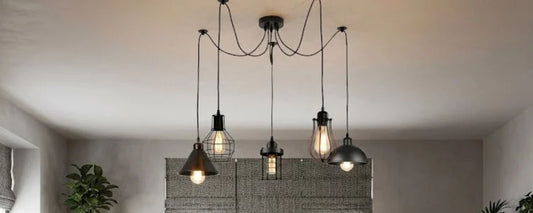
- Wire cages — open metal frames that expose the bulb itself, popular for industrial and vintage-filament looks.
- Globe and glass shades — enclosed, rounded shapes that diffuse light in every direction and work well with decorative LED filament bulbs.
If you're not sure which shape suits your room, the safest rule is: the more direct light you need for a task (cooking, reading, working), the more open the shade should be; the more ambience you want, the more the shade should enclose and soften the bulb.
Best Easy Fit Lamp Shades for the Kitchen
Kitchens need lampshades that cope with heat, moisture, and everyday wear while still throwing enough light to cook and work by. The shade materials that perform best in a kitchen are quite different from what suits a bedroom or living room, because brightness and practicality matter more than mood.
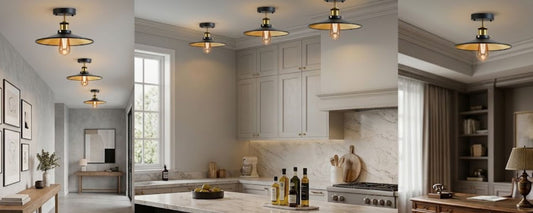
- Open metal cage shades — these don't trap heat or steam, and they let light spread widely across worktops, which matters more in a kitchen than almost anywhere else in the home.
- Drum shades in wipeable fabric or PVC-coated cotton — practical for grease and splashes near a hob, and they diffuse light evenly for task lighting over an island or table.
- Glass, opal, or cone shades with a reflective inner finish — best where maximum brightness matters, such as directly over a sink, hob, or breakfast bar, since they don't absorb light the way heavier fabrics do.
Avoid heavily pleated or richly textured fabrics in a kitchen — they're harder to keep clean and tend to dull light output over a workspace where you actually need it.

Black Gold Inner Cone Pendant Lamp Shade
Compact metal cone, easy fit E27
Shop this shade →

Flat Easy Fit Lampshade, 22cm
E27/B22 base · multiple finishes
Shop this shade →
Kitchens usually benefit from layered lighting rather than a single central fitting, so think of an easy fit shade as one layer rather than the whole solution. A bright cage or cone shade over the main ceiling point handles general illumination, while under-cabinet strips or a pendant cluster over an island cover the close-up task lighting that a single central shade can't reach on its own.
For more kitchen-specific fixture advice — including pendant height and spacing over an island — see our kitchen lighting collection and kitchen island pendant guide.
Best Easy Fit Lamp Shades for the Living Room
Living rooms are where shade choice affects mood as much as function, so this is the one room where it's worth prioritising colour and material over raw brightness.
- Tapered or empire fabric shades — soften light for a warmer, more relaxed atmosphere, ideal over a main seating area.
- Pleated or linen shades — add texture and work well as a central statement piece in an otherwise neutral room.
- Cage or Edison-style metal shades — suit industrial or minimalist living rooms and pair well with dimmable filament bulbs for evening ambience.
A warm-toned fabric shade — cream, mustard, or terracotta — will usually do more for how a living room feels than a purely functional cage or glass shade. Colour temperature matters as much as the shade material here: a warm white bulb (around 2700K) paired with a fabric shade gives the cosiest result, while a cooler bulb inside the same shade can end up feeling clinical.
Because a single central shade rarely lights a living room well on its own, most UK living rooms layer it with at least one other source — a floor lamp beside a sofa, or wall lights either side of a fireplace or media unit. If you're mixing an easy fit ceiling shade with other fixtures, our living room lighting collection has table lamps and wall lights designed to layer with it.

Best Easy Fit Lamp Shades UK: What to Look For
When buying easy fit lamp shades in the UK, check these four things before ordering, since getting any one of them wrong is the most common reason a shade ends up loose or a poor fit.
- Fitting type — confirm whether your ceiling rose is B22 (bayonet) or E27 (screw). Most easy fit shades list both, but always check the fitter ring size against your existing holder before buying.
- Shade diameter vs room size — as a rule of thumb, shade diameter in inches should roughly match half the room's width in feet, so a 12–14ft room suits a 14–16 inch shade.
- Material and light output — fabric and paper diffuse light softly; metal, glass, and open cages give brighter, more direct light.
- Bulb compatibility — most easy fit shades work with standard LED, filament, or dimmable bulbs, but shade material can restrict maximum wattage, so check the manufacturer's guidance on the product page.
Bulb Wattage and Heat: What to Check Before You Buy
Enclosed fabric and paper shades sit closer to the bulb than an open cage, which means heat has less room to dissipate. Modern LED bulbs run far cooler than old incandescent ones, so most easy fit shades today are rated for a maximum LED wattage rather than a maximum overall wattage — always check this figure on the product page rather than assuming any bulb will fit safely. Open wire cages don't have this restriction in the same way, since the bulb is fully exposed to the air, which is one reason they're a popular choice for anyone wanting to use a larger or more decorative filament bulb.

Browse the full range in our Easy Fit Lamp Shades & Cages collection, or head straight to Easy Fit Shades if you already know the style you want.
Easy Fit Lamp Shades vs Alternatives
| Easy fit shade | Hardwired pendant | Plug-in pendant | |
|---|---|---|---|
| Installation | Clips onto existing fitting, no tools | Requires an electrician | Plugs into a wall socket |
| Best for | Renters, quick updates | Permanent installs, new builds | Rooms without a ceiling rose |
| Cost | Lowest | Higher (fitting + electrician) | Mid-range |
| Flexibility | Easy to swap or change | Fixed once installed | Moveable |
Easy fit shades are the right choice when you already have a working ceiling rose and want a fast, tool-free update. Hardwired pendants make more sense for a permanent design feature or a room that's being rewired anyway. Plug-in pendants suit rooms with no ceiling point at all, which is common in some rental flats — our Glow Up Collection covers plug-in options if that's your situation.
Why Is My Easy Fit Lamp Shade Not Working?
If a newly fitted easy fit lamp shade isn't lighting up, or it sits loose on the fitting, the cause is almost always one of the following:
- Loose fitter ring — the spring clips inside the fitter need to grip the lamp holder firmly. Reseat the shade and press until you feel or hear it click into place.
- Wrong fitting size — a shade rated for B22 won't sit securely on an E27 holder, and vice versa. Double-check the fitting type before assuming a fault.
- Bulb not seated correctly — remove the shade and confirm the bulb is fully screwed or twisted into the holder.
- Shade weight vs fitting strength — heavier shades, like large metal cages or thick glass, can loosen the spring fitter over time. A fitter with stronger tension, or an added shade support ring, usually solves this.
- Blown bulb or fitting fault — if the shade is secure but there's still no light, test with a bulb you know works before assuming the shade itself is at fault.
If the shade still won't stay in place after reseating it, check that the fitter ring hasn't been bent or stretched — this is the most common reason an otherwise correctly-sized shade becomes loose after a few months of use.
Caring for Your Easy Fit Lamp Shade
Easy fit shades need very little maintenance, but a few habits keep them looking new for longer:
- Dust fabric and paper shades regularly with a vacuum crevice attachment or a soft brush — this prevents dust building up and dulling the colour.
- Wipe metal cages and glass shades with a microfibre cloth; a mild soapy solution handles grease in kitchen settings.
- Always switch off and let bulbs cool before cleaning a shade that's attached to a pendant.
- For fabric shades, avoid soaking or submerging — spot clean only, since the fitter ring and wiring inside the frame aren't designed to get wet.
- Check the fitter ring's grip every few months, especially on heavier shades — a quick reseat prevents the loose-shade problem before it starts.
With basic care, a well-made easy fit shade will easily last several years, and because it isn't wired in, swapping it for a new style later is just as quick as the original fit.
Frequently Asked Questions
What fitting do I need for an easy fit lamp shade?
Most UK ceiling roses use either B22 (bayonet) or E27 (screw). Check your existing fitting before ordering, as shades are typically designed for one or the other, though some include an adaptor.
Can I fit an easy fit lamp shade myself?
Yes. No wiring or electrical work is needed — the shade clips or slides onto your existing lamp holder in a few minutes, with the power switched off.
Are easy fit lamp shades safe with LED bulbs?
Yes, most easy fit shades are compatible with LED, filament, and dimmable bulbs, but always check the shade's maximum wattage rating on the product page before fitting a high-output bulb.
Why has my lamp shade come loose after a few weeks?
This is usually the spring fitter ring losing tension, often because of a heavier shade. Reseating the shade, or fitting a shade support ring, typically resolves it.
What's the difference between an easy fit shade and a lampshade cage?
Both attach the same way. A "shade" typically refers to fabric, paper, or solid material that diffuses light, while a "cage" is an open wire frame that exposes the bulb for a more industrial look and a wider light spread.
What size easy fit lamp shade do I need?
As a starting rule, match the shade diameter in inches to roughly half the room's width in feet. A small bedroom or hallway usually suits a 10–12 inch shade, while a 12–14ft living room or kitchen works well with a 14–16 inch shade.
Do easy fit lamp shades work with dimmer switches?
Yes, as long as the bulb you use is dimmable and your existing dimmer switch is compatible with that bulb type — the shade itself doesn't affect dimming, since it has no wiring of its own.
Labels:
Vorig
Flush vs. Semi-Flush Ceiling Lights: Which Is Right for Your Room?
Volgende
LED Panel Lights vs Downlights: Which Suits Your Space?