How to Light a Hallway and Make It Stand Out: The Complete UK Guide
Your hallway is the first thing guests see and the last thing you pass through on your way out of the door — yet it's the room most homeowners forget when planning their lighting. Get it wrong and even a beautifully decorated home feels flat and unwelcoming from the moment you step inside. Get it right and your hallway becomes a confident, characterful introduction to the rest of your home.
This guide walks you through exactly how to light a hallway properly: how to assess your space, which fixtures suit which layouts, how to choose the right bulbs, and the design tricks that turn a purely functional corridor into a feature in its own right. Whether you're a UK homeowner refreshing a tired entrance, an interior designer specifying for a client, or a renovator starting from bare plaster, you'll find practical, buildable ideas here — along with the lighting collections at LEDSone UK that bring them to life.
Why Hallway Lighting Deserves More Attention Than You Think
Hallways are working spaces. They handle the heaviest foot traffic in the home, connect every room, and almost always lack natural daylight. Many UK hallways — particularly in terraced houses, flats, and period properties — are narrow, long, or both, with a single window (if any) at one end. That combination of constant use and limited daylight means artificial lighting isn't a finishing touch in a hallway; it's the difference between a space that feels safe and inviting and one that feels like a dim afterthought.
Good hallway lighting does three jobs at once. It provides safety, illuminating stairs, level changes, and the front door so nobody trips or fumbles for keys. It sets the first impression, establishing the mood and style that the rest of your home will build on. And it creates a sense of flow, drawing the eye through the space and making a narrow corridor feel wider, longer, and more deliberate. When you nail all three, the hallway stops being a passageway and starts being a room.


Step One: Assess Your Hallway Before You Buy Anything
The single biggest mistake people make is choosing a light they like the look of before they've understood their space. Spend ten minutes assessing these factors and every decision afterwards becomes easier.
Ceiling height. Standard UK ceilings sit around 2.4 metres. If yours is at or below that, hanging pendants will eat into headroom and need careful sizing or a flush approach. If you have a generous Victorian or Edwardian ceiling — or a double-height stairwell — you have room for a statement drop that lower ceilings simply can't carry.
Length and width. A short entrance hall needs one well-chosen fixture. A long corridor needs a rhythm of repeated lights to avoid dark patches between pools of brightness. A narrow hallway needs fixtures that don't project far from the wall or ceiling so you're not brushing against them as you pass.
Natural light. Note where (and whether) daylight enters. A hallway with a glazed front door or a window benefits from layered lighting that complements daylight by day and takes over fully at night. A windowless internal hallway is working from artificial light alone, so brightness and colour temperature matter even more.
Architecture and existing wiring. Are there existing ceiling points, wall sockets, or switch positions you want to keep? Period features like cornicing, dado rails, or an arched recess can be highlighted beautifully — or fought against if you ignore them. Knowing what's already there tells you whether a hardwired fixture, a plug-in option, or a portable lamp is the realistic route.
The Golden Rule: Light in Layers
Professional lighting designers never rely on a single source, and a hallway is no exception. The technique that makes a space feel finished is layering — combining three types of light so the room has depth, flexibility, and atmosphere rather than one flat wash.
Ambient lighting is your base layer: the general, overall illumination that lets you move through the space safely. In a hallway this is usually a ceiling pendant, a flush fixture, or a run of recessed downlights.
Task lighting handles specific jobs — seeing clearly at the front door to check the post, reading a house number, or finding the right key. Wall lights flanking a doorway or a lamp on a console table do this job well.
Accent lighting is where character lives. This is the layer that highlights artwork, a mirror, a gallery wall, a houseplant, or an architectural feature, adding the shadows and contrast that make a space feel designed rather than merely lit.
You don't need all three in a tiny entrance, but in anything longer than a couple of metres, combining at least two layers transforms the result. The trick is to put them on separate switches or a dimmer so you can shift from bright and practical in the morning to soft and atmospheric in the evening.
The Best Types of Lighting for a Hallway
Here's where it gets exciting. Each fixture type brings something different to a hallway, and the right choice depends entirely on the space you assessed above. Below are the workhorses of hallway lighting — and how to use each one well.
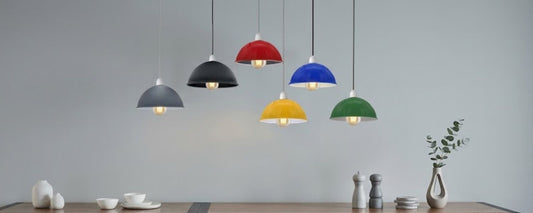
Pendant Lights: The Statement Maker
A pendant is the most direct way to give a hallway personality. Hung centrally in an entrance hall or above the foot of the stairs, a single well-chosen pendant becomes an instant focal point and announces the style of your home before a guest has taken their coat off.
The key with hallway pendants is proportion and drop height. In a standard-ceiling hallway, the bottom of the fixture should sit no lower than around 2.1 metres from the floor so nobody walks into it. In a stairwell or double-height void, you have licence to go dramatic — a long-drop pendant or a tiered fixture that's visible from both floors creates a genuine "wow" moment. For shape, a compact globe, lantern, or cluster keeps a narrow hall feeling tidy, while a bolder silhouette suits a wide, square entrance.
Browse the full range of hallway pendant lights at LEDSone to find a drop that fits your ceiling height and sets the tone you're after. Pendants pair especially well with a warm, vintage-style LED filament bulb for an inviting glow the moment you walk in.


Wall Lights: The Hallway's Secret Weapon
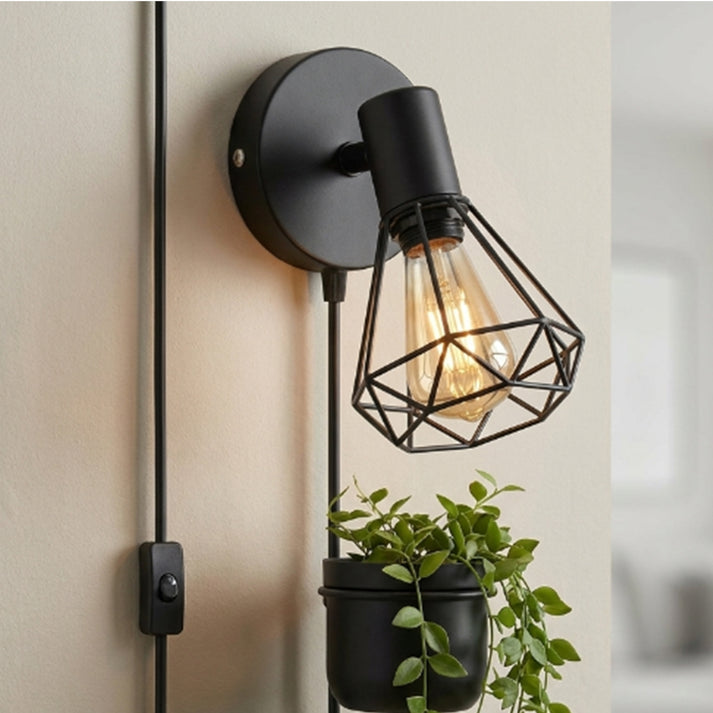
If there's one fixture type purpose-built for hallways, it's the wall light. Because they throw light outward and upward without dropping down into the walkway, wall lights are ideal for narrow hallways where a pendant would feel intrusive or a low ceiling rules out a drop fixture entirely.
Mounted in pairs along a corridor, wall lights create a rhythm that visually lengthens the space and eliminates the dark patches that make a hall feel cramped. Positioned either side of a mirror or doorway, they deliver flattering, even task light. And angled up or down, they wash the wall with the kind of soft accent glow that makes a space feel considered. Swan-neck sconces lend a classic, characterful look; flush, modern designs suit contemporary interiors; and up-and-down fixtures create elegant overlapping cones of light on the wall.
LEDSone's wall lights and sconces collection runs to hundreds of designs — from industrial metal and brushed brass through to glass and minimalist modern — so you can match the finish to your door furniture, radiators, and handles for a joined-up scheme. Mount them roughly 1.5 to 1.7 metres from the floor (eye level) and space them evenly down a long hall for the best effect.


Spider Lights: Modern Drama for Bigger Spaces
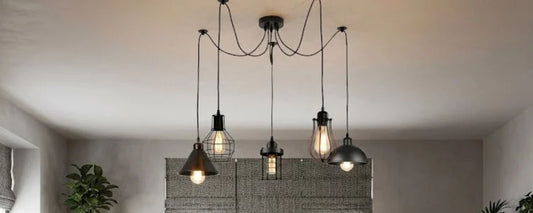
For a hallway with height and a contemporary edge, a spider light is a brilliant way to stand out. These multi-arm cluster fixtures fan out several pendants from a single ceiling point, creating a sculptural, gallery-like installation that fills a tall stairwell or a generous open entrance with movement and interest.
A spider light works hardest in a double-height hallway or above a staircase, where its cascading arms can be staggered at different lengths to draw the eye upward and turn dead vertical space into a feature. In a flatter, single-storey hall they can still work spread horizontally across a wider ceiling, but they truly shine where there's volume to fill. Explore the spider light collection at LEDSone if your hallway has the height to carry a modern statement piece — it's one of the


Table Lamps: Warmth at a Glance
It's easy to forget that not every hallway light has to be fixed to a wall or ceiling. If you have a console table, a slim sideboard, or even a deep windowsill near your entrance, a table lamp adds an instant layer of warm, low-level light that softens the whole space and makes it feel like part of the home rather than a thoroughfare.
A lamp at this height creates a pool of cosy light exactly where you need it — somewhere to set keys, sort post, or check your reflection — and because it's plug-in, you can add it without any rewiring. It's also the easiest layer to change seasonally or restyle when you fancy a refresh. A pair of matching lamps on a wider console brings symmetry and a boutique-hotel feel; a single sculptural lamp makes a quieter statement. Have a look through the table lamps collection at LEDSone for designs that double as decorative objects when switched off and ambient warmth when switched on.


Ceiling and Flush Fixtures: The Low-Ceiling Solution
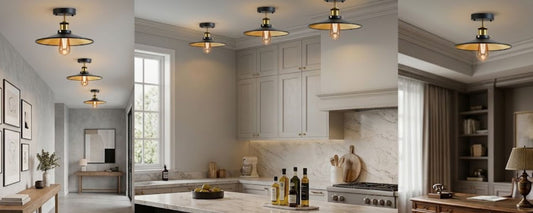
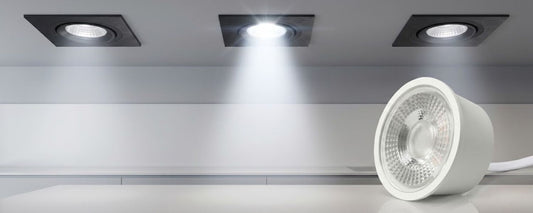
Where headroom is tight, a flush or semi-flush ceiling light gives you clean, even ambient light without any drop. Recessed downlights take this further, disappearing into the ceiling entirely and giving a long hall an uncluttered, modern look — ideal as a base ambient layer that you then enrich with wall lights or a lamp for character. The principle holds: use flush fixtures for practical, all-over brightness, then add a second decorative layer so the space doesn't feel clinical.


Lighting Specific Hallway Types
Different hallway shapes call for different strategies. Here's how to approach the most common UK layouts.
Narrow Hallways
Narrow halls are the most common challenge in British homes, and the answer is almost always wall lights over pendants. Flush wall fixtures keep the walkway clear, while mounting them on one wall and a mirror opposite bounces light across and makes the space feel noticeably wider. Keep fixtures slim, avoid anything that projects more than a few centimetres, and use a consistent warm colour temperature throughout so the eye travels smoothly from end to end. A single small flush ceiling light can provide the ambient base, with wall lights doing the decorative work.
Long Hallways and Corridors
Length is about rhythm. A long corridor lit by one central fixture will always have gloomy ends. Instead, repeat a fixture at regular intervals — three matching pendants evenly spaced, or a series of paired wall lights down both sides — to create consistent pools of light with no dead zones. Repetition also has a powerful design effect, leading the eye down the hall and giving it a sense of intention and grandeur. Recessed downlights spaced evenly achieve the same even coverage in a more minimal scheme.
Small Entrance Halls
In a compact entrance, you're working with one main decision. Choose a single fixture that punches above its weight: a characterful pendant or a flush light with real design merit, ideally paired with a console-table lamp or a single wall light to add a second, softer layer. Because the space is small, you can afford a slightly more expensive statement piece — it's doing all the work, and it's the first thing anyone sees.
High Ceilings and Stairwells
A double-height hallway or open stairwell is a gift. This is where long-drop pendants and spider lights earn their place, filling the vertical volume and creating drama visible from multiple floors. Make sure the fixture is reachable for bulb changes (or plan for a long-life LED), and consider how it reads from both the top and bottom of the stairs. Add wall lights along the staircase itself for safe, even tread lighting that doubles as accent light.
Period and Modern Properties
Match your fixtures to your architecture. A Victorian or Edwardian hallway suits brass, glass, lantern, and vintage-filament styles that echo the era, while highlighting original features like cornicing or tiled floors with accent light. A modern or new-build hallway carries clean-lined flush fixtures, recessed downlights, and minimalist wall lights beautifully. In both cases, coordinating the metal finish of your lights with existing ironmongery — door handles, hinges, radiator valves — is the detail that makes a scheme feel professionally designed.
Choosing the Right Bulbs: Colour Temperature and Brightness
The fixture is only half the story — the bulb inside it determines how the whole hallway feels.
Colour temperature, measured in Kelvin (K), is the most important choice. For a welcoming home hallway, aim for warm white at around 2700K–3000K. This gives a soft, golden, inviting glow that flatters paint colours and timber. Cooler temperatures (4000K and above) read as clinical and are better suited to garages or utility areas than to an entrance you want to feel like home.
Brightness, measured in lumens, should scale with the space. A small entrance hall might need around 1,000–2,000 lumens in total across all fixtures; a long or double-height hall will need considerably more, spread across several sources rather than concentrated in one harsh point. Spreading brightness across layers always looks better than one over-bright fixture.
Dimmability is the upgrade that does the most for atmosphere. Pairing dimmable LED bulbs with a compatible dimmer switch lets your hallway flex from full brightness for safety and cleaning to a low, ambient glow for evenings — and modern LED bulbs deliver this while using a fraction of the energy of old incandescents and lasting up to 25,000 hours. Just check that both bulb and switch are rated as dimmable before you buy. Energy-efficient LED bulbs in the right base fitting (E27, B22, or E14 depending on your fixture) are the smart, long-life choice for a space the lights are switched on in every single day.
Design Ideas to Make Your Hallway Truly Stand Out
Once the fundamentals are in place, these are the touches that lift a hallway from “well lit” to “memorable.”
- Lead with a statement piece. A single, beautiful pendant or spider light gives the eye an anchor and instantly sets the style. Don’t be afraid to let it be the hero.
- Use symmetry. Paired wall lights either side of a mirror, or two matching lamps on a console, create the balanced, boutique-hotel look that reads as intentional and high-end.
- Light a mirror. A well-lit mirror near the door is both practical (a last check before you leave) and brilliant for bouncing light deeper into the space, making a narrow hall feel open.
- Highlight art and features. A gallery wall, a single large print, or an architectural arch comes alive with accent light. Angled wall lights or directional spots add the contrast that flat ambient light can’t.
- Wash the walls. Up-and-down wall lights create overlapping cones of light that add texture and rhythm along a corridor — one of the most effective ways to make a plain hallway feel designed.
- Layer in low light. A console lamp or a low-level glow near the floor adds warmth and a welcoming, lived-in feel, especially in the evening.
- Coordinate finishes. Tie the metal of your lights to your door furniture and other hardware. This single discipline does more for a cohesive look than almost anything else.


Practical Considerations: Placement, Safety and Switching
A few technical points will keep your scheme both legal and liveable.
- Mounting heights. Wall lights generally look best at around 1.5–1.7 metres (eye level); pendants should clear head height with the base no lower than roughly 2.1 metres in a standard hall.
- Spacing. In a long hall, space repeated fixtures evenly — a rough guide is one fixture every 1.8–2.5 metres — adjusting so the pools of light overlap slightly with no gaps.
- Switching. Position switches sensibly at both ends of a through-hall or top and bottom of stairs (two-way switching), and put decorative and ambient layers on separate circuits or a dimmer for flexibility.
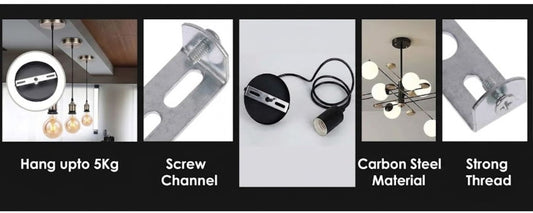
- Regulations and installation. In the UK, fixed hardwired lighting work falls under Part P of the Building Regulations. Any new circuits or consumer-unit work should be carried out or certified by a qualified electrician. Plug-in wall lights, table lamps, and “easy-fit” fittings are the simple, no-rewiring route if you want to upgrade your hallway without calling in a sparky — a genuinely useful option for renters and quick refreshes alike.
Common Hallway Lighting Mistakes to Avoid
Steer clear of these and you’re most of the way to a great result:
- Relying on one central fixture in anything but the smallest hall — it leaves dark ends and flat, shadowless light.
- Choosing cool white bulbs that make an entrance feel like an office rather than a home.
- Ignoring the ceiling height and hanging a pendant people walk into.
- Forgetting accent lighting, so the space is functional but characterless.
- Mismatched finishes that make a collection of nice lights look uncoordinated.
- No dimmer, locking you into one brightness for every time of day.
Frequently Asked Questions
What is the best type of lighting for a hallway?+
There’s no single answer — the best hallways use layers. For most UK homes, a combination of an ambient ceiling fixture (pendant or flush) plus decorative wall lights gives the ideal balance of safety, style, and atmosphere. Narrow halls lean on wall lights, while tall stairwells suit pendants or spider lights.
How do I light a narrow hallway?+
Use slim wall lights mounted at eye level rather than pendants that intrude into the walkway, add a mirror to bounce light across the space, and keep a consistent warm colour temperature from end to end. A single small flush ceiling light can provide the ambient base.
What colour light is best for a hallway?+
Warm white, around 2700K–3000K, creates the welcoming, golden glow you want in an entrance. Avoid cool white (4000K+), which feels clinical in a living space.
How many lights do I need in a hallway?+
It depends on length. A small entrance may need just one or two well-placed fixtures, while a long corridor needs repeated lights every 1.8–2.5 metres to avoid dark patches. Spread brightness across several sources rather than relying on one bright fixture.
Can I upgrade my hallway lighting without rewiring?+
Yes. Plug-in wall lights, table lamps on a console, and easy-fit fittings let you add layers and style with no electrical work, making them ideal for renters or quick refreshes. New hardwired circuits should be installed by a qualified electrician.
How can I make my hallway look bigger with lighting?+
Bounce light with a well-lit mirror, use wall lights to wash the walls and lead the eye down the space, keep colour temperature consistent, and avoid bulky low-hanging fixtures that can make a narrow hallway feel cramped.
Bring Your Hallway to Life with LEDSone:A hallway is a small space with an outsized impact — the frame around every other room in your home. By assessing your space first, lighting in layers, choosing fixtures that suit your layout, and finishing with warm, dimmable bulbs and a few considered design touches, you can turn a forgotten corridor into a confident, welcoming statement.Whether you’re after a show-stopping pendant light to anchor your entrance, characterful wall lights to lead the eye down a narrow hall, a modern spider light to fill a soaring stairwell, or a warm table lamp to add that final layer of glow, LEDSone UK has a design — and a price — to match. Explore the collections, pick your finish, and give your hallway the entrance it deserves.
Labels:
Vorig
Cage Pendant Lights with Edison Bulbs – How to Pair & Where to Buy UK
Volgende
How to Choose LED Panel Lights: A UK Buyer's Guide to Brightness, Colour & Fitting