
HANDLES

Matt Black 128mm Cabinet Door Handles Drawers & Cupboards ~2413
Regular price
From £5.39 GBP
In Stock
-17%

Black Birdcage Cupboard Drawer Door Knob Pull Iron 35mm~2417
Regular price
From £4.49 GBP
Sale price
£5.39 GBP
In Stock
-17%

Modern Kitchen Cabinet - Drawer Pulls & Door Furniture Handles in Black ~1330
Regular price
From £5.21 GBP
Sale price
£6.25 GBP
In Stock
-10%
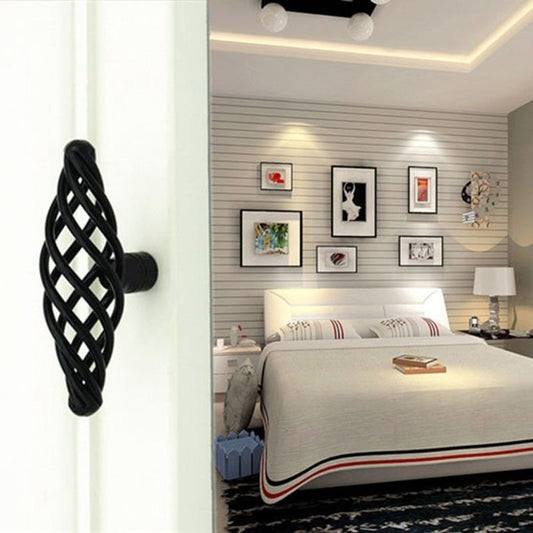
Vintage Black Cabinet Kitchen Birdcage Furniture Handles pulls ~2416
Regular price
From £4.49 GBP
Sale price
£4.99 GBP
In Stock
-17%

Black Vintage Drawer Pull Handles 128mm Metal Cabinet Handle ~2414
Regular price
From £5.21 GBP
Sale price
£6.25 GBP
In Stock
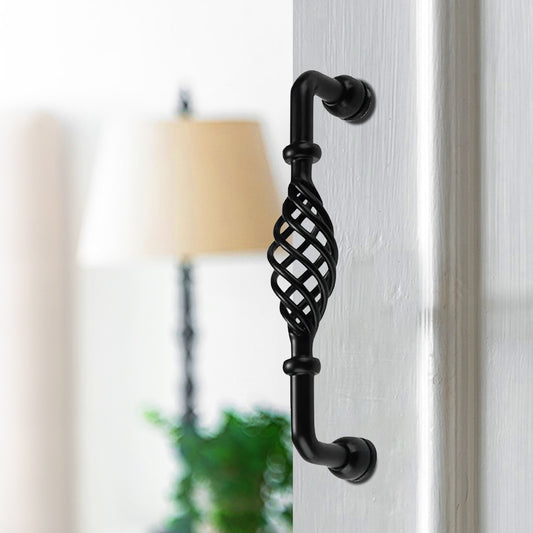
Kitchen Cabinet 96mm Handle Vintage Black Bird Cage Cupboard Pull ~2415
Regular price
From £4.17 GBP
In Stock
LEDSone Guide
How to Choose Kitchen Cabinet Handles (UK Sizing & Style Guide)
A handle swap is one of the cheapest ways to change how a kitchen or bedroom reads — a full re-fit usually runs under an hour and under £50 for an average kitchen, yet it changes the whole first impression of the room. The catch is that it only works if the size and finish are right: get the hole spacing wrong and you're left filling old screw holes, and mix finishes across a run of doors and it reads as unfinished rather than eclectic.
This guide walks through the three main handle types, what the sizing numbers on a listing actually mean, how black compares to other finishes, a straightforward fitting process, and which of our black cabinet handles suit which job.
Why the Handle Matters More Than You'd Think
Handles get touched every single day, so they carry more of a kitchen's character than most people expect — far more than a single accent wall or a change of worktop, because a handle is something you physically interact with rather than just look at. A slim matt black bar pull reads as modern and understated, sitting flush against a flat-front cabinet without drawing attention to itself. A birdcage or swirl knob adds a vintage, slightly industrial note, the kind of detail that turns a plain door into something with a bit of character.
The finish matters just as much as the shape. Mixing a matt black bar pull on the doors with a brushed brass knob on the drawers usually looks accidental rather than intentional, even if both pieces are individually well made. Pick one finish family and carry it across every door and drawer in the room — including the fridge and dishwasher panel if they're integrated — and the kitchen reads as considered rather than work-in-progress. If you do want to mix metals, the easiest way to do it without it looking like a mistake is to separate them by function: black bar pulls on cabinet doors, and a contrasting knob only on an island or a single feature unit.
There's a practical side too. Handles that are too small for the door they're on are awkward to grip and get more force concentrated through a smaller fixing point, which is where you start to see them work loose over time. Sizing isn't just a style decision — it affects how long the handle lasts under daily use.
The Three Main Handle Types
Almost every cabinet handle on the market falls into one of three categories. Knowing which is which makes browsing a lot faster, and it's also the first filter most kitchen fitters use when speccing a job.
Bar Pulls
A straight bar fixed at two points. The standard choice for cabinet doors and wide drawers — easy to grip with a full hand, and available in 96mm and 128mm hole spacings to match most UK kitchen carcasses. This is what most trade fitters default to for anything wider than a cutlery drawer.
Knobs
A single fixing point, usually round or shaped. Better suited to smaller drawers, cutlery drawers, and anywhere a bar pull would look oversized or where you only need a fingertip grip. Birdcage and swirl designs fall in this category, and they're usually the cheaper option per unit too.
T-Bar / Multi-Size Ranges
A flexible middle ground — the same design offered across several sizes and fixing types, so you can knob your small drawers and bar-pull your doors without mixing brands or finishes across the kitchen. Useful when a single kitchen has a real mix of door and drawer widths.
There's a fourth, less common category worth a mention: edge pulls, which sit along the top edge of a drawer front rather than on its face, giving a near-handleless look while still being a real, grippable handle. We don't currently stock these, but if you're chasing a fully minimal look and don't want to commit to true handleless hardware, it's worth knowing the category exists.
Handles We'd Point You To
Three that cover the range above, all in stock in matt black and all shipping from UK stock:

Bar Pull · 128mm
Matt Black 128mm Cabinet Door Handles
£5.39
Shop this handle →

Knob · 35mm
Black Birdcage Cupboard & Drawer Knob
£4.49 £5.39
Shop this handle →

T-Bar · 35–128mm
Modern Drawer Pulls & Door Handles
From £2.59 £6.25
Shop this handle →
If you're not sure which to start with: the T-bar range above is the one to pick when a single kitchen needs several sizes, since ordering every size from the same listing keeps the finish and screw thread consistent across the whole room. The 128mm bar pull is the safest single choice for a full run of standard-width doors. The birdcage knob works best as an accent on a small number of drawers rather than across the whole kitchen, where its more decorative shape would compete with itself.
What Size Handle Do I Need?
"Hole centres" (or hole-to-hole) is the measurement that matters — it's the distance between the two screw holes on a bar pull, measured centre to centre, not the total length of the handle, which is usually a little longer than the hole spacing on both ends. Knobs only have one fixing hole, so hole centres don't apply to them; you just need the diameter to be a comfortable size for the drawer.
Measuring an existing handle
- Take the handle off, or measure it in place with a tape measure or ruler.
- Find the centre of each screw hole on the back of the handle.
- Measure the straight-line distance between those two centre points — that's your hole centres figure, usually rounded to the nearest 32mm increment (64mm, 96mm, 128mm, 160mm and so on are the common UK sizes).
- If you no longer have the old handle, measure the two screw holes already drilled into the door or drawer front instead — same method, just measuring the holes rather than the handle.
| Size | Typical Use | Fixing |
|---|---|---|
| 35mm | Small drawers, cutlery drawers, jewellery boxes | Single-point knob |
| 96mm | Standard kitchen drawers, narrow cupboard doors | Two-point bar pull |
| 128mm | Wardrobe doors, wide cabinet doors, larger drawers | Two-point bar pull |
If you're replacing existing handles on pre-drilled cabinets, matching the hole spacing exactly avoids filling and re-drilling — this is the single most common mistake people make when reordering handles, and it's an easy one to avoid by measuring first rather than guessing from memory. If you're fitting to new or previously undrilled doors, you've got a free choice — 128mm suits most standard UK cabinet doors, and 96mm is the usual fallback for narrower drawer fronts where a 128mm bar would overhang the edges.
Matt Black vs Other Finishes
Matt black has stayed one of the most requested cabinet hardware finishes for several years running, and it's easy to see why for a working kitchen: it doesn't show fingerprints or water spots the way polished chrome does, it doesn't tarnish the way unlacquered brass does over time, and it sits comfortably against almost any cabinet colour — white, grey, sage green, navy and natural wood fronts all take a black handle without looking out of place.
The main alternatives worth knowing about: brushed brass and gold read warmer and suit traditional or Shaker-style kitchens; brushed or satin nickel sits between black and chrome, softer than polished chrome but still cool-toned; and polished chrome, while still common in older kitchens, has fallen out of favour for new fits because it shows marks quickly and reads dated faster than the satin finishes. If you're choosing for a kitchen you'll want to keep looking current for a decade rather than a couple of years, matt black and satin/brushed finishes are the safer long-term picks over anything high-shine.
How to Fit a Cabinet Handle
Fitting a handle is a genuinely simple job — no specialist tools and no electrician required, since it's a purely mechanical fixing. Here's the general process for a bar pull; a knob follows the same steps but with only one hole to deal with.
- Measure and mark. Decide on the position — usually vertically centred on a drawer front, or in the top corner of a door nearest the opening edge — and mark your hole centres with a pencil.
- Drill pilot holes. Use a drill bit slightly smaller than the screw thread, drilling straight through from the inside face of the door or drawer front to avoid splintering the outer surface.
- Fit the screws from behind. Feed the fixing screws through from the inside of the door or drawer, through the drilled holes, and into the back of the handle.
- Tighten evenly. Tighten both screws a little at a time, alternating between them, so the handle pulls in flush and straight rather than sitting at an angle.
- Check for wobble. Give the handle a firm tug once fitted — if there's any play, tighten further or check the screw length is right for your door thickness.
Every handle in our range ships with the fixing screws included, sized for standard UK cabinet door and drawer thicknesses. If your doors are unusually thick — some solid wood or double-skinned doors run past the standard screw length — a longer screw from a hardware shop will do the job; the handle design itself doesn't change.
Matching Handles to Your Kitchen Style
The right handle shape depends more on your cabinet fronts than on any fixed rule, so here's roughly how the common UK kitchen styles tend to pair up.
Shaker
The recessed panel on a Shaker door gives you room for a slightly longer bar pull without it looking cramped. Black or brushed brass both work well; knobs suit the smaller drawers if you want a mixed look.
Flat-Front / Modern Slab
A slim, minimal bar pull in matt black keeps the flat surface reading clean. Avoid anything too decorative here — the door style is doing the visual work, not the hardware.
Industrial / Loft
Birdcage knobs, exposed screw heads, and anything with a slightly weathered or iron finish suit this style. It's the one place a more decorative handle genuinely earns its place.
Handleless
If you're leaning fully handleless, an edge pull or push-to-open mechanism is the better fit than a traditional handle — see the FAQ below for the trade-offs before committing.
Pairing Handles With the Rest of the Room
If you're doing a wider refresh rather than just the cabinets, our matt black finish carries through cleanly into lighting — a vintage-style pendant or a run of black pendant lights over an island picks up the same tone as birdcage or bar-pull handles below, and a black fabric cable ties the two together if the fitting is exposed. Repeating one finish across hardware and lighting is a cheap way to make a kitchen feel designed rather than assembled piece by piece — it costs the same as buying mismatched finishes, just requires picking one at the start.
Frequently Asked Questions
What does "hole centres" mean on a cabinet handle?
It's the distance between the two fixing screws on a bar-style handle, measured from the centre of one hole to the centre of the other — not the overall length of the handle. Knobs have a single fixing point, so this measurement doesn't apply to them.
Can I fit these handles myself?
Yes — all our cabinet handles come with the necessary fixing screws and fit with a standard screwdriver or drill. No specialist tools or an electrician are needed, since these are purely mechanical fittings. See the step-by-step fitting section above for the full process.
Will a new handle cover my existing screw holes?
Only if the hole spacing matches. Going from a 96mm handle to a 128mm handle (or vice versa) will leave the old holes exposed unless you fill and re-drill, so measure your current handle's hole centres before ordering a replacement.
What's the difference between a bar pull and a knob?
A bar pull fixes at two points and is easier to grip with a full hand — better for doors and wider drawers. A knob fixes at a single point and suits smaller drawers where a bar would look oversized.
Do black handles suit a modern kitchen, or only industrial/vintage styles?
Both. A slim matt black bar pull reads as contemporary and minimal on flat-front cabinets, while a birdcage or swirl knob leans more vintage or industrial. The finish is the same either way — it's the shape that sets the tone.
What are the downsides of going fully handleless?
Handleless kitchens (push-to-open mechanisms or edge pulls) cost more than standard hardware, the grooves on edge-pull designs can collect dirt and grime that's harder to clean than a standard handle, and push-to-open catches can be trickier to use for anyone with limited grip strength. They give a very clean look, but it's worth weighing against a slim bar pull, which achieves a similar minimal effect at a lower cost and with none of the mechanical parts to maintain.
How long does a handle swap take for a full kitchen?
For someone comfortable with a drill, a full kitchen of 15–20 doors and drawers typically takes an hour to two hours, most of which is drilling pilot holes if the doors aren't already drilled to the new size. If you're matching existing hole centres exactly, it's faster still since there's no new drilling required at all.
Can I mix knob and bar-pull styles in the same kitchen?
Yes, and it's a common approach — bar pulls on doors and wider drawers, with a matching knob (same finish and design family) on narrower drawers like cutlery trays. The key is keeping the finish consistent rather than the shape; mixing shapes reads intentional, mixing finishes usually doesn't.
Browse the full range
Matt black handles, knobs and pulls — free UK delivery on orders over £25.